
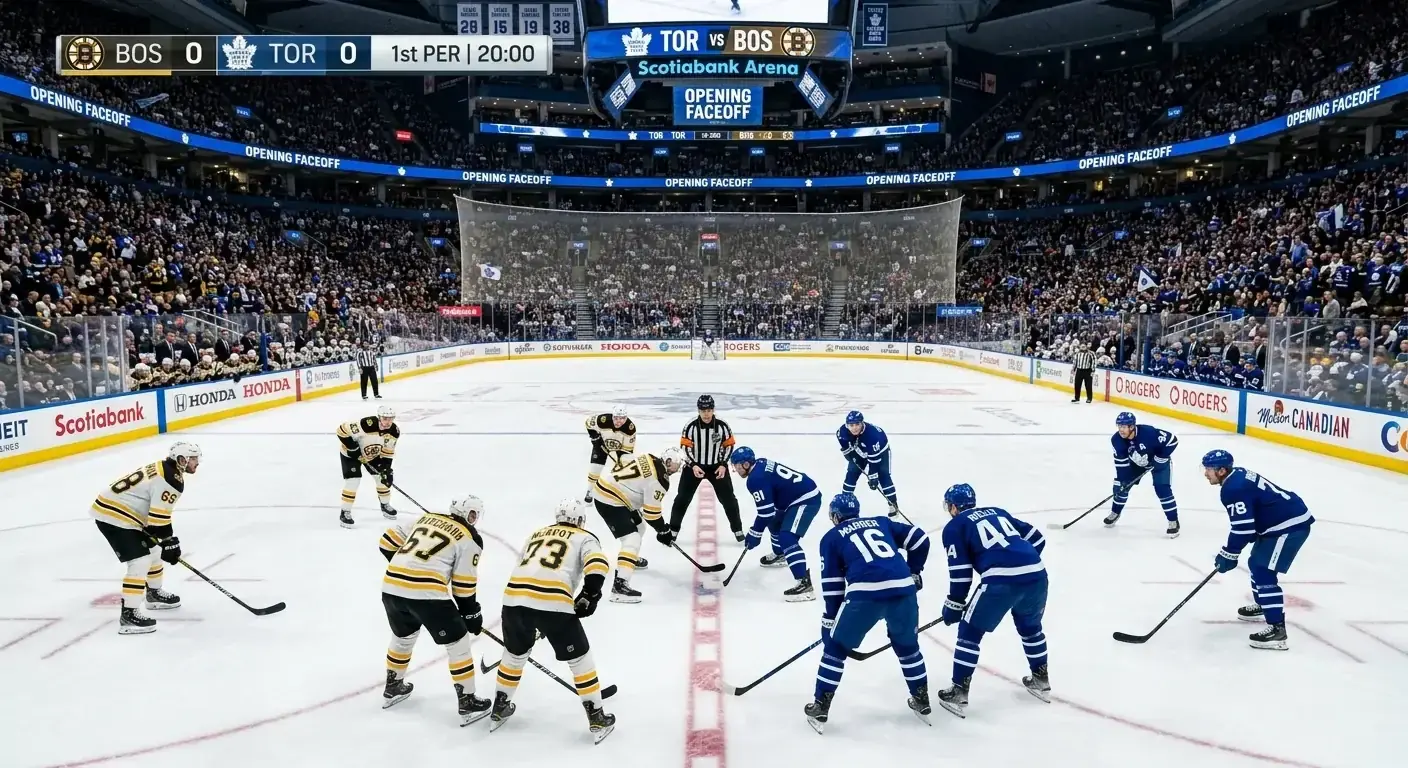

The Simplest Hockey Bet — And Why It Isn’t Simple
Pick the team that wins. That’s the moneyline in one sentence, and it’s the reason most newcomers start here. I started here too, back when I assumed that hockey betting was just football betting on ice. It took me about three weeks and a string of overtime losses to realise that the simplest market in hockey carries a structural wrinkle that football doesn’t: the draw is effectively eliminated from the full-game result, but the path to victory — regulation, overtime, shootout — fundamentally changes what you’re paid.
The average sportsbook hold across US markets hit 10.15% in 2025, meaning the house retains roughly a tenth of every dollar wagered when you account for margins across all bets. On hockey moneylines, the margin is typically tighter — around 4-5% — because the two-way market is competitive and well-traded. That’s good news for bettors. It means moneyline pricing in hockey tends to be sharper than in many other sports, and line shopping across bookmakers can shave real percentage points off your cost.
But sharp pricing doesn’t mean easy money. Hockey moneylines sit in a narrow band compared to football or basketball. Heavy favourites rarely drift beyond -250, and significant underdogs rarely exceed +220 in the regular season. That compression reflects the sport’s inherent parity — on any given night, an underdog wins roughly 40-42% of the time. Understanding that baseline before you place a single bet is the difference between informed wagering and guessing.
Full-Game Moneyline vs 60-Minute Line
Here’s where hockey diverges from almost every other sport in the betting market. The standard moneyline — the one you’ll see listed first at any UK bookmaker — includes overtime and the shootout. Whoever wins the game, by any means, wins the bet. Simple enough.
But there’s a second market that most UK football bettors overlook entirely: the 60-minute line, sometimes listed as “regulation time” or “3-way moneyline.” This market includes the draw as an outcome. If the game is tied after three periods, anyone who bet Team A or Team B on the 60-minute line loses, and only the draw pays out.
The pricing difference between these two markets is significant. On the full-game moneyline, a moderate favourite might be -150 (decimal 1.67). On the 60-minute line, that same team might be -120 (decimal 1.83) because the draw siphons off probability from both sides. The draw itself typically prices around +280 to +320 (3.80-4.20 decimal), depending on how evenly matched the teams are.
I use the 60-minute line in two specific situations. The first is when I have a strong opinion on regulation-time superiority but want to avoid the lottery of a shootout. Shootouts are notoriously unpredictable — they’re essentially a skills competition detached from team performance. The second is when I think a game is heading for overtime and want to back the draw as a standalone bet. Roughly 25% of NHL games reach overtime, which means the draw at +300 isn’t the long shot it looks like on paper.
One caution: not every UK bookmaker offers the 60-minute line for every game. Coverage tends to be better for marquee matchups and playoff games. If you can find a bookmaker that consistently offers it, you’ve added a genuinely useful tool to your arsenal.
Reading Moneyline Odds in All Three Formats
UK bookmakers default to fractional odds, but NHL lines originate in American format and much of the analysis you’ll find online uses decimals. If you’re going to bet on hockey seriously, fluency in all three is non-negotiable. NHL totals typically open around 6 or 6.5, and the moneyline pricing reflects the expected closeness of each matchup relative to that scoring environment.
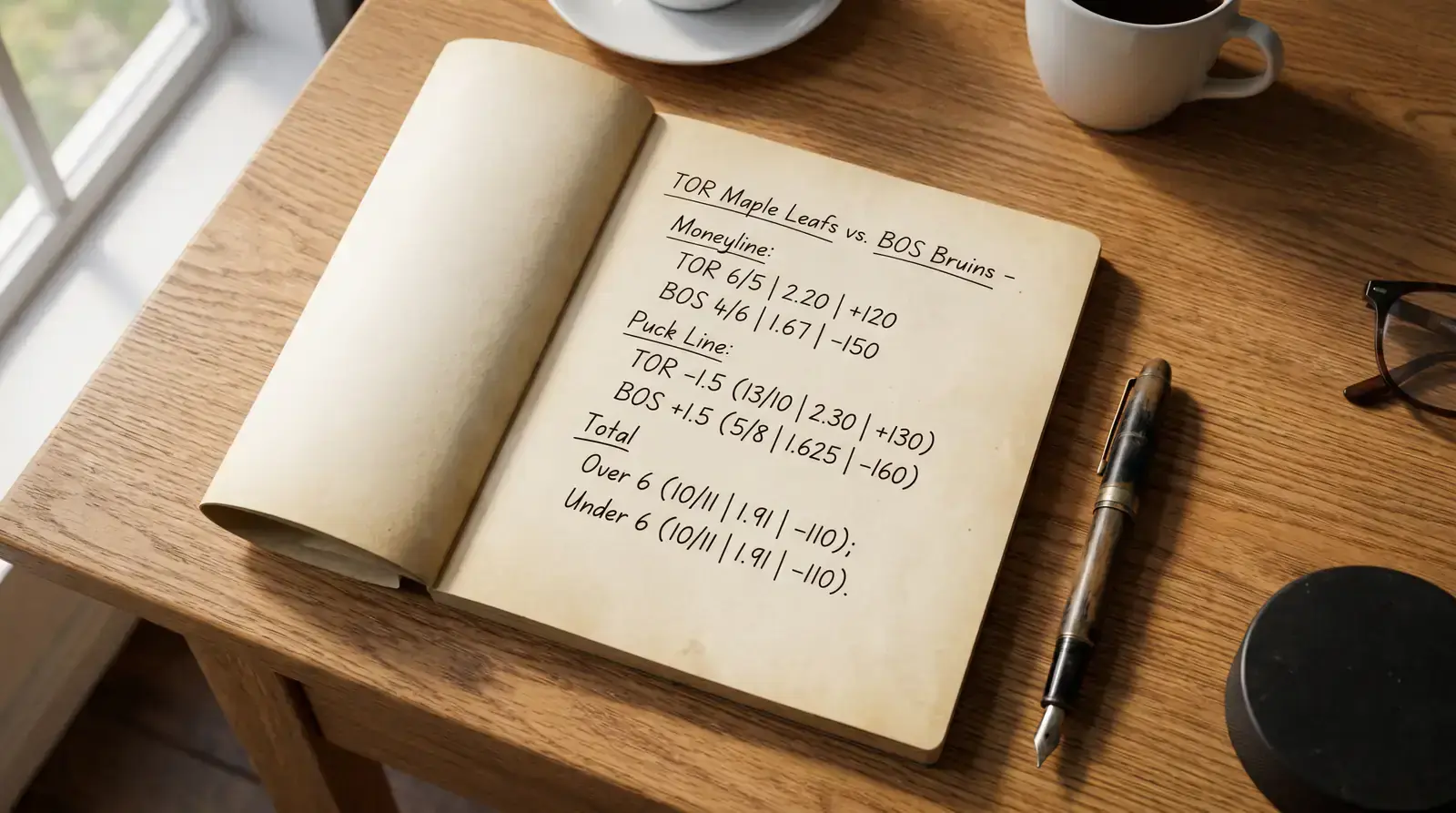
Take a standard NHL moneyline: Team A is the favourite at -150 (American). In fractional odds, that’s 2/3. In decimal, it’s 1.67. The implied probability is 60%. Team B, the underdog, is +130 (American), which converts to roughly 13/10 fractional and 2.30 decimal, with an implied probability of 43.5%. Add those two probabilities — 60% + 43.5% = 103.5% — and the 3.5% excess is the bookmaker’s margin.
For heavier favourites, the conversions get less intuitive. A team at -200 (American) is 1/2 fractional and 1.50 decimal — implied probability 66.7%. The underdog at +170 is 17/10 fractional and 2.70 decimal — implied probability 37%. The combined overround here is 103.7%, a typical margin for a two-way market.
I keep a simple conversion reference pinned to my desktop. After six years of daily use, I still double-check occasionally. Misreading -150 as +150 is exactly the kind of error that costs real money, and it’s easier to make than you’d think when scrolling through a dozen games at 1am UK time.

Most UK-facing bookmakers allow you to toggle between formats in the site settings. I recommend setting your default to decimal for hockey. It makes calculating returns and comparing prices across books far more intuitive than working in fractions, and it aligns with the way most European and analytical resources present hockey odds.
Moneyline Strategy: Favourites vs Underdogs
A season-long strategy of blindly backing every NHL favourite on the moneyline will lose money. I’ve run this simulation across five seasons, and the margin erosion from juice alone guarantees a negative return. The same applies to backing every underdog. The moneyline isn’t a system bet — it’s a selective weapon.
With favourites, the key is selectivity based on price. I’ve found the sweet spot sits between -130 and -170 (decimal 1.59-1.77). In this range, the favourite wins often enough to overcome the juice, but only if your selection process filters for genuine edges — goaltender matchups, schedule spots, recent form adjusted for opponent quality. Below -130, you’re often not being compensated for the risk. Above -170, the price demands a win rate north of 63%, which is difficult to sustain over a full season.
Underdogs offer a different dynamic. The most profitable underdog window, in my tracking, falls between +120 and +160 (decimal 2.20-2.60). These are teams that the market views as slight underdogs — not hopeless cases, but not coin flips either. In this range, the underdog needs to win roughly 38-42% of the time to break even, and many of these teams clear that threshold, particularly at home or against teams on the second night of a back-to-back.

One strategic angle that’s often overlooked: the over/under market can inform your moneyline selection. If a game has a high total (6.5 or above), the favourite is slightly more likely to cover a wide moneyline because high-scoring games tend to produce larger margins. If the total is low (5 or 5.5), the underdog’s chances of a close loss or outright upset increase. These correlations aren’t dramatic, but over hundreds of bets, they compound.
The moneyline is where most hockey bettors begin, and many never leave it. That’s not a problem if you approach it with discipline, price sensitivity, and an understanding of the structural quirks that make hockey different from the sports you’ve bet on before. The teams that win aren’t always the teams that pay.
