


Stanley Cup Odds: The Longest and Most Rewarding Hockey Bet
I backed the Florida Panthers to win the Stanley Cup in October 2023 at 25/1. They lost in the final that year but came back and won it the next season. I didn’t have that second bet. That experience taught me two things about Cup futures: timing is everything, and the longest bets test your patience more than your analysis.
The Stanley Cup outright is the flagship futures market in hockey. Average NHL viewership reached 546,000 per regular-season broadcast in the 2025-26 season, a 25% jump year on year and the highest in 14 years. That growing audience has driven increased betting volume on Cup futures, making the market more liquid and the odds tighter than they were even three seasons ago. The days of finding a genuine contender at 40/1 are largely gone, but value still exists for bettors who know where and when to look.
For UK punters, the Stanley Cup future is equivalent to an outright Premier League winner bet, but with a crucial structural difference: the NHL season spans eight months from October to June, and between October and April you’re betting on a team’s ability to qualify for and then win four best-of-seven playoff series. That’s a marathon followed by a sprint, and the factors that matter in each phase are different.
How Stanley Cup Futures Are Priced
NHL teams generated a record $1.53 billion in sponsorship revenue in the 2024-25 season, a 9% increase year on year. That commercial growth reflects the league’s rising profile and directly feeds into futures market pricing. More money flowing into hockey means more attention from bookmakers, sharper models, and tighter opening prices.

Futures pricing begins immediately after the Cup is awarded, usually in late June. The defending champion typically opens as the favourite or close to it. Preseason prices are based on projected rosters, off-season acquisitions, and power-rating models that estimate each team’s strength relative to the field. The combined implied probability of all 32 teams significantly exceeds 100% — the overround on a Cup futures market can reach 130-150%, meaning the bookmaker is building a margin of 30-50% across the entire field.
That bloated margin is the price of entry for a market with 32 possible outcomes. It’s also why selective betting is critical. Backing three or four teams at preseason prices gives you exposure to the field without concentrating your risk on a single outcome. I typically allocate 3-5% of my annual hockey bankroll to Cup futures, spread across two or three teams whose prices I believe underestimate their chances.
Prices move throughout the season in response to injuries, trades, and performance. A team that starts the season at 20/1 and opens the new year at 15-2 has seen its odds halve, which means early bettors hold a significant price advantage. Conversely, a contender that loses its starting goaltender to injury in November might drift from 8/1 to 18/1, creating a potential re-entry point if the goaltender’s timeline suggests a return before the playoffs.
When to Place a Stanley Cup Futures Bet
Three timing windows consistently produce the best value on Cup futures. The first is preseason, immediately after odds open. The market is at its most uncertain, the overround is at its widest, and prices for dark-horse contenders are at their most generous. The downside is information asymmetry — you’re betting before a single game has been played, which means your analysis relies on projection models and off-season moves.

The second window is the trade deadline, typically in early March. The deadline reshapes the contender landscape in a single afternoon. Teams that add key players see their odds shorten; teams that sell assets drift to long shots. The immediate post-deadline movement is often an overreaction. I’ve found value in the 48-72 hours after the deadline, when the market corrects its initial impulse. A team that acquired a depth defenceman and saw its odds shorten from 12/1 to 8/1 might drift back to 10/1 within a week as the market recalibrates.
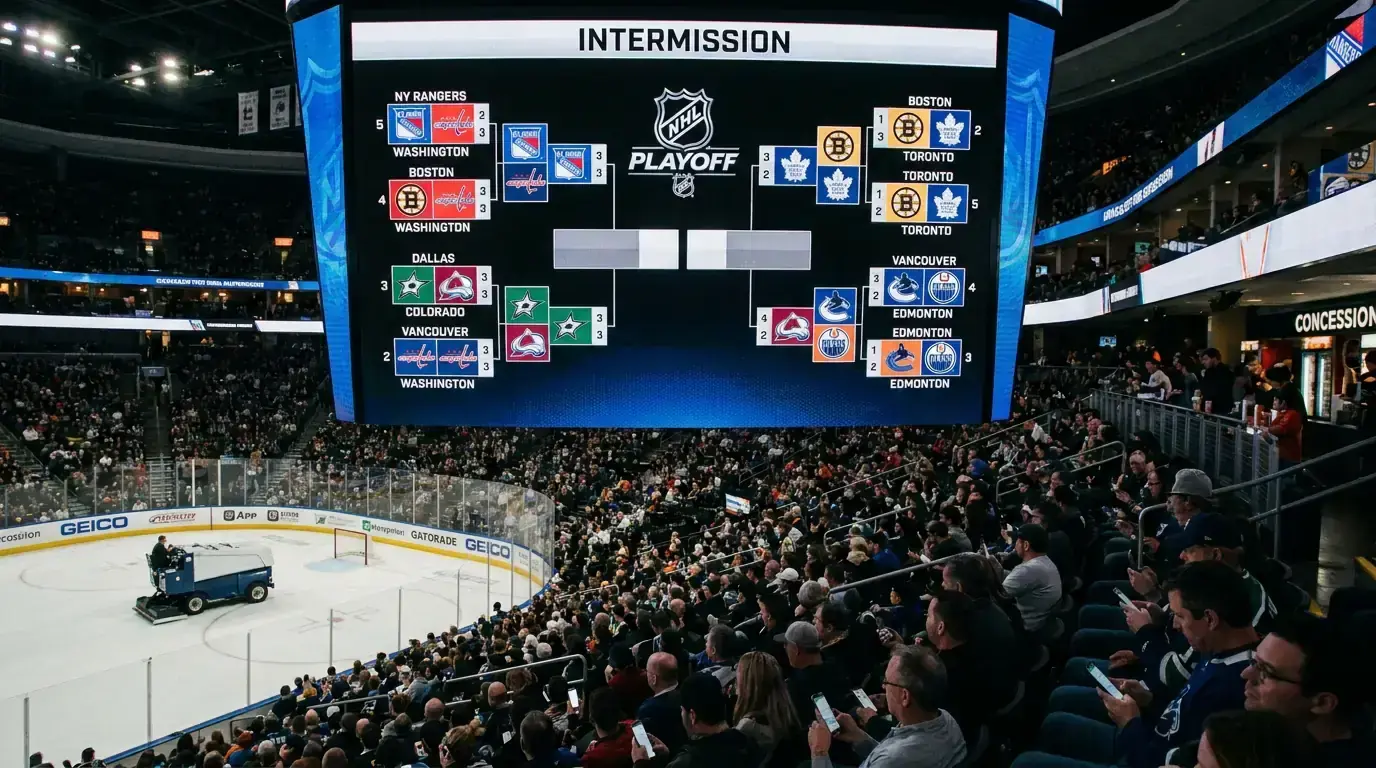
The third window is the playoff bracket reveal. Once the first-round matchups are set, you can assess each contender’s path to the final. A strong team on the “easier” side of the bracket — facing lower-seeded opponents in the first two rounds — offers a more favourable risk profile than the same team facing the conference’s second-best side in round two. Bracket-based assessment is common in March Madness betting and translates directly to Stanley Cup futures.
What Past Stanley Cup Winners Tell Us About Value
Sara Slane, then a senior vice president at the American Gaming Association, described legal sports betting as a $216 million opportunity for the NHL. That figure estimated the combined impact of content consumption growth and operator spending. It was published in 2018, and the actual impact has exceeded it. The betting market around the Cup has grown even faster than projected.

Looking at the last decade of Cup winners, a pattern emerges. Champions tend to share three characteristics: a top-10 goaltender by save percentage during the regular season, a top-five power play, and at least one line capable of scoring at an elite rate. Teams that lacked one of these three pillars occasionally reached the final but rarely lifted the Cup. For futures bettors, this triad serves as a useful screening filter before committing capital.

Another historical pattern: the favourite at the start of the playoffs wins the Cup roughly 15-18% of the time. That means the pre-playoff favourite fails more than four times out of five. For a bettor holding a futures ticket on the favourite, this is a reminder to temper expectations. For a bettor considering other futures markets beyond the Cup, it’s a reminder that diversifying across multiple outright markets — conference winners, division winners, individual awards — can distribute your risk more effectively than concentrating on the Cup alone.
Cup futures aren’t fast money. They’re a season-long commitment that locks up capital, tests conviction, and rewards patience. If you can handle the wait and time your entries well, they’re one of the most satisfying bets in hockey.
