


Your First Hockey Bet: What You Need Before You Start
My first ever hockey bet was a moneyline on a team whose name I’d seen on a highlights clip. I didn’t know the difference between regulation time and overtime, I didn’t check who was in goal, and I certainly didn’t understand what the numbers next to the team names meant. I won that bet. It was the worst thing that could have happened, because it convinced me that hockey betting was easy. The next seven bets corrected that assumption.
Around 10% of the UK population actively participates in online sports betting. If you’re reading this, you’ve decided that hockey is worth adding to your betting portfolio — and you’re right, it is. But hockey has its own rules, its own market structures, and its own rhythms that differ from football, tennis, or horse racing. This guide walks you through everything you need before placing that first bet, so your introduction to hockey wagering is informed rather than accidental.
Before anything else, you need a funded account with a UKGC-licensed bookmaker that offers hockey markets. Most major UK operators cover NHL games; fewer cover the EIHL or international tournaments. Don’t overthink the choice of bookmaker at this stage — pick one you already have an account with, confirm they offer hockey, and move on. You can optimise later. What matters now is understanding the sport and the markets well enough to make your first bet a deliberate one.
Hockey Rules That Matter for Betting
You don’t need to understand every rule in the NHL rulebook to bet on hockey. But you do need to understand the rules that directly affect bet settlement, because getting these wrong is the fastest way to lose a bet you thought you’d won.
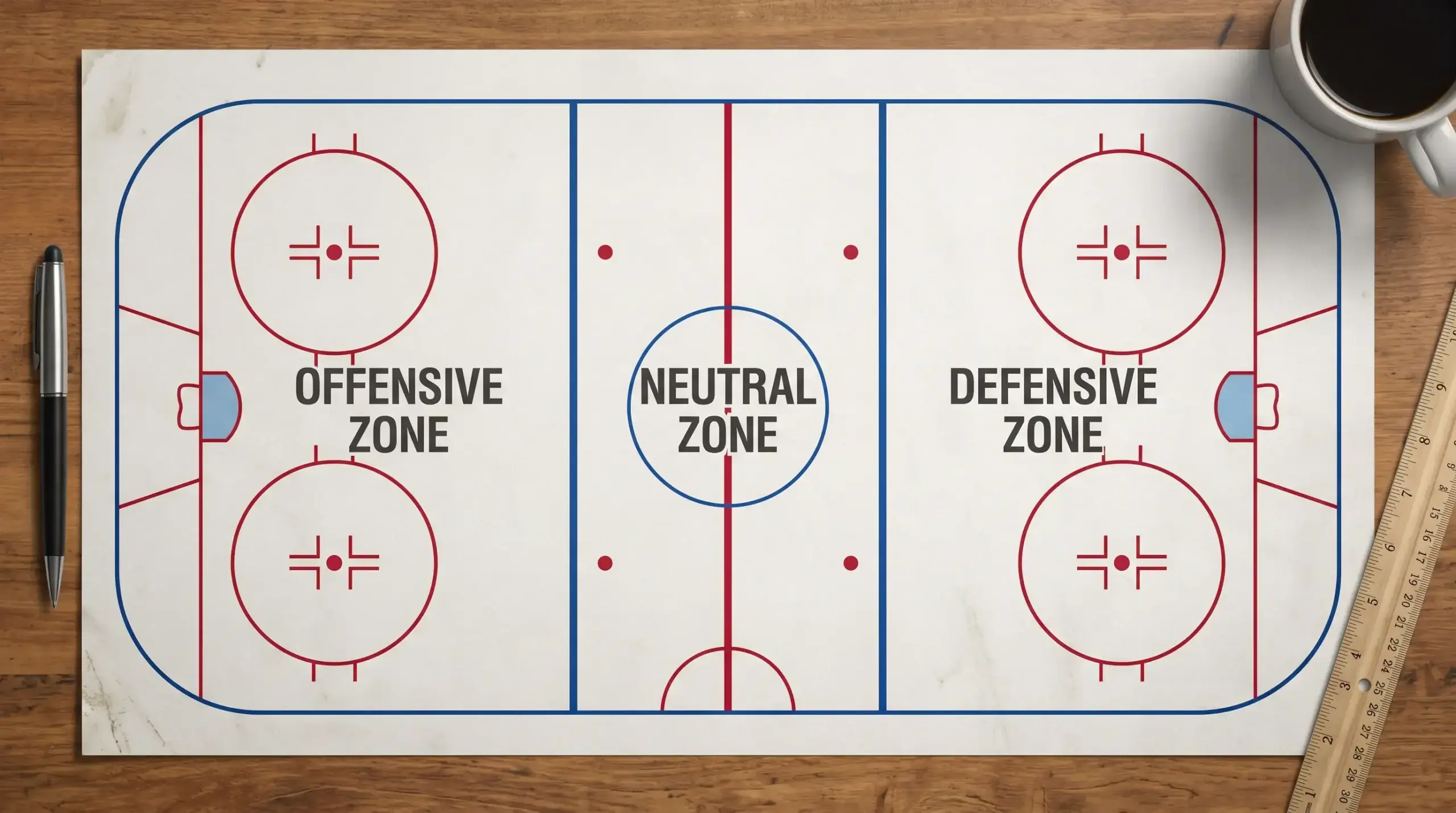
An NHL game consists of three 20-minute periods. If the score is tied after 60 minutes (regulation time), the game goes to overtime — a five-minute, three-on-three period in the regular season. If nobody scores in overtime, the game goes to a shootout. Here’s why this matters: some bets include overtime and shootout results, and some don’t. A moneyline bet typically includes overtime. A puck line bet (the hockey equivalent of a spread) also includes overtime. But some bookmakers offer a “60-minute line” or “regulation time” market that settles at the end of regulation regardless of what happens in overtime. If you don’t check which market you’re betting on, you’ll be surprised when your “winning” bet is settled as a loss — or vice versa.

Goals are scored more frequently than in football but less frequently than in basketball. The average NHL game produces around six goals. That baseline matters because it sets the context for totals markets (over/under), period markets, and your general sense of what a “normal” hockey score looks like. A 3-2 game is ordinary. A 7-4 game is unusual. A 1-0 game is not as rare as you’d think — roughly 3-4% of NHL games end 1-0.
One more rule that trips up beginners: goaltender substitutions. In hockey, the goaltender can be pulled from the ice in the final minutes of a game and replaced by an extra attacker. This “empty net” scenario is unique to hockey and creates a spike in late-game goals that affects live betting and totals markets. About 76% of UK bettors aged 18-24 use mobile phones for gambling, and if you’re watching on your phone while betting live, understanding the empty-net dynamic prevents panic decisions when a goal is scored into an unguarded net.
Placing Your First Hockey Bet: Step by Step
Open your bookmaker’s app or website and navigate to ice hockey. You’ll see a list of upcoming games, typically organised by league (NHL, EIHL, or international). Select a game. You’ll be presented with markets — the different types of bets available for that game.
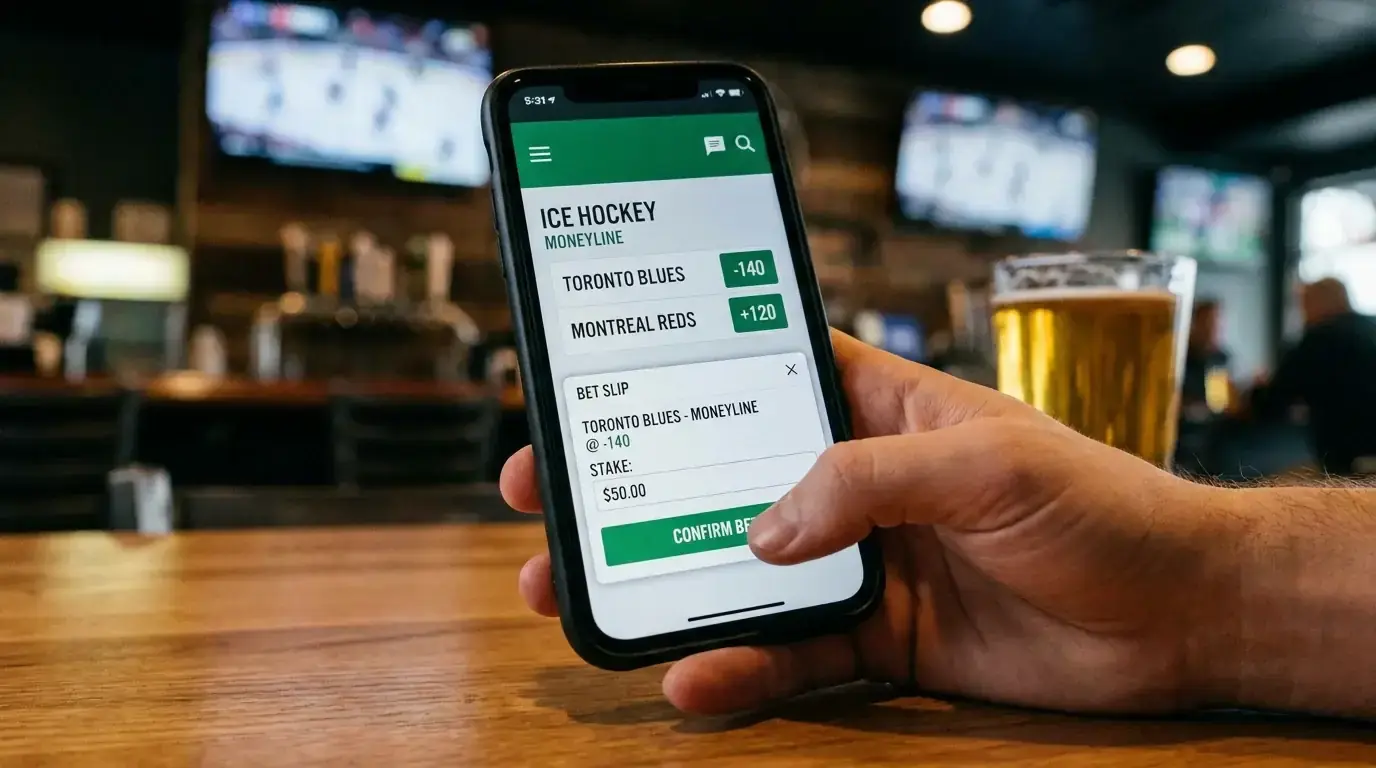
For your first bet, I recommend the moneyline — a simple bet on which team will win the game. The moneyline shows two prices (or three, if the bookmaker offers a draw option for regulation time). The favourite has the shorter price; the underdog has the longer price. In fractional odds, a favourite might be priced at 4/7 (meaning you’d need to stake £7 to win £4), while the underdog might be 6/4 (stake £4 to win £6). In decimal odds, these would be approximately 1.57 and 2.50. If you’re not comfortable with odds formats, take five minutes to familiarise yourself before placing the bet.
Select your team, enter your stake, and review the potential return displayed on the bet slip. Confirm the bet. That’s it. Your first hockey wager is live. Now watch the game — or check the score when you wake up, since NHL games typically start between 11pm and 3am UK time.
One practical tip: start with a small stake. I’d recommend 1% of whatever amount you’ve set aside for hockey betting. The purpose of your first few bets isn’t to make money — it’s to learn how hockey markets work, how bets are settled, and how the sport feels as a betting product. Treat the early stakes as tuition.
Three Mistakes Every Beginner Hockey Bettor Makes
The first mistake is ignoring the goaltender. No other variable in hockey affects the outcome as directly as who’s standing between the pipes. A team with its starting goaltender is a fundamentally different proposition from the same team with its backup. Before placing any hockey bet, check who’s starting in goal for both teams. This information is usually available from team reporters on social media several hours before game time.

The second mistake is betting too many games. The NHL runs 15-16 games on most nights during the regular season. The temptation for beginners is to bet on five, six, or seven of them because they’re all available. Resist that urge. Even experienced hockey bettors find genuine edges in only two or three games per night. Betting on games where you don’t have a clear opinion is entertainment, not strategy — and it’s expensive entertainment.
The third mistake is chasing losses with parlays. After a losing night, beginners often load up a four or five-leg accumulator the next day, hoping one big win will erase the previous losses. This almost never works. Parlays compound the bookmaker’s margin across every leg, making them one of the least profitable bet types over the long run. If you’re going to bet parlays, treat them as occasional entertainment bets with small stakes, not as recovery tools.

Hockey betting has a learning curve, but it’s shorter than most people expect. The sport’s structure — fixed game length, clear scoring events, limited substitution patterns — makes it more analytically tractable than football. Give yourself twenty games of watching and small-stakes betting before you form any opinions about whether hockey is “your” sport for wagering. By then, you’ll understand the rhythm well enough to know whether this is a market you want to invest time in.
