


Why UK Punters Are Turning to Ice Hockey
Three years ago, a friend of mine — a dyed-in-the-wool Premier League bettor — asked me why I spent my evenings watching men in helmets chase a rubber disc around a sheet of ice. Fair question. I told him the truth: hockey is the sport where I found the softest lines, the widest information gaps, and the most consistent edge I've ever had as a bettor. He laughed. Then he watched me cash four of five NHL picks that weekend.
Hockey betting in the UK is still a minority pursuit, and that's precisely what makes it valuable. While 10% of the UK population actively wagers on sport online, the overwhelming majority of that money flows toward football, horse racing, and tennis. Hockey sits in the margins — a sport where bookmakers allocate fewer resources to pricing, where the average punter has less knowledge than the market demands, and where a disciplined analyst can exploit gaps that simply don't exist in the Premier League. The UK's online gambling market generated £11.5 billion in gross gambling yield in the most recent full financial year, yet hockey's share of that pie remains a sliver. For anyone willing to learn the sport's rhythms, that sliver is opportunity.

What's changed recently is the sheer availability. UK bookmakers have been expanding their niche sports coverage at a pace that outstrips mainstream categories, and hockey has been a direct beneficiary. You can now find NHL moneylines, EIHL match winners, and IIHF tournament outrights at operators that wouldn't have touched the sport five years ago. The infrastructure is there. The question is whether you're ready to use it.
I've spent six years analysing hockey lines — NHL primarily, but also the EIHL and international tournaments — and in this guide I'm laying out everything I think a UK-based bettor needs to understand before placing a single wager on ice hockey. Markets, odds mechanics, league structures, analytical tools, bookmaker selection, and the responsible gambling framework that should underpin all of it. Every claim is backed by data, not by the vague hand-waving that characterises most hockey betting guides online.
This is the sport where I found my edge. Here's how you can start looking for yours.
Before we get into the mechanics of markets and odds, it helps to understand the landscape you're betting into — and the numbers that define it.
The Numbers and Angles That Matter Most
- The UK gambling industry generates over £11.5 billion in annual gross gambling yield, but hockey remains an underpriced niche — bookmakers allocate fewer resources to hockey line-setting than to mainstream sports, creating exploitable gaps for informed bettors.
- Three core markets dominate hockey betting: moneyline, puck line (+-1.5 goals), and totals (over/under, typically set around 6-6.5 in the NHL). Understanding how overtime rules affect each market is essential before placing a bet.
- The starting goaltender shifts implied probability by 3-5% — the single most actionable piece of pre-game information. Monitor morning skate confirmations.
- Live betting now accounts for more than half of all wagering handle at major operators. Hockey's fast momentum shifts and discrete scoring events make in-play markets a natural fit.
- Advanced stats like xG, Corsi, and Fenwick are freely available and almost entirely ignored by competitors. Using them is a structural advantage, not a luxury.
The UK Hockey Betting Landscape in Numbers
I keep a spreadsheet of every claim I read in competitor hockey betting guides. The column labelled "Source" is almost entirely blank. Writers say hockey is "growing in the UK" without a single number. They call the NHL "increasingly popular" without referencing viewership data. I find this bizarre, because the numbers are out there — and they tell a far more compelling story than any unsourced assertion.
£11.5bn
UK gambling industry gross yield, FY2023/24
290m+
Online bets placed monthly on real events in the UK
+34%
Year-on-year growth in niche sports markets at new UK bookmakers
+33.9%
EIHL average attendance growth over 4 seasons
The UK gambling industry generated total gross gambling yield of £11.5 billion in financial year 2023/24 — a 5.7% increase year-on-year and 13.5% above pre-pandemic levels. That is not a market in decline. It's a market that is consolidating online, with 290 million bets placed each month on real sporting events via digital platforms. The growth trajectory through to 2030 is forecast at a compound annual growth rate of 6.2%. Within that expansion, niche sports — including ice hockey — are growing faster than the mainstream categories that dominate the betting landscape.
Hockey's position within this ecosystem is unusual. It's not a fringe sport globally — the NHL is a multi-billion-dollar operation, and the EIHL just posted its fourth consecutive season of record-breaking attendance — but in the UK betting market, it's treated as a secondary offering. That disconnect between the sport's actual scale and its betting market visibility is exactly where value lives. When a bookmaker prices 40 football matches a day with dedicated trading teams and then prices two or three hockey games with a thinner desk, the pricing quality differs. I've seen it, consistently, across years of tracking opening and closing lines.
Bill Miller, president and CEO of the American Gaming Association, put the broader trend plainly when discussing the industry's 2025 results: record revenues and tax contributions, he said, demonstrate the broad appeal of regulated gaming markets and why strong state oversight remains essential as the industry evolves. That statement was directed at the US market, where sports betting revenue hit a record $16.96 billion in 2025, but the principle applies here too. Regulated markets are expanding, and hockey is riding inside that expansion.
NHL viewers rank third among all major US sports audiences by median household income. For bookmakers, wealthier audiences mean higher average stakes. For bettors, it means the sport attracts a demographic that sustains deep, liquid markets — the kind where pricing is competitive enough to reward a sharp approach.

What matters for bettors isn't just the size of the market, but its maturity relative to other sports. Football betting in the UK is hyper-efficient — bookmakers employ enormous trading teams, and the public market is extraordinarily well-informed. Hockey is not there yet. The pricing is looser, the information asymmetry is wider, and the tools for exploiting that asymmetry are available to anyone willing to do the work. The data I'm presenting throughout this guide isn't decorative. It's the foundation of every edge I've found in six years of hockey wagering.
Core Hockey Betting Markets
My first ever hockey bet was a disaster — not because I lost, but because I won by accident. I'd backed a team on the moneyline without understanding that the market I'd selected included overtime and shootout. The team went to a shootout, won, and I collected. Had I placed the same bet on the "60-minute line" — regulation time only — I'd have pushed. It took me weeks to realise I'd been lucky rather than right, and that single experience taught me the most important lesson in hockey betting: know the market you're in before you put money on it.
Hockey offers fewer market types than football but more structural nuance within each one. The three core markets — moneyline, puck line, and totals — account for the vast majority of hockey betting volume. Understanding how each works, and how they interact, is non-negotiable.
Moneyline — a bet on which team wins the game. In hockey, this can mean the full game (including overtime and shootout) or regulation time only, depending on the market.
Puck line — hockey's equivalent of the point spread. The standard puck line is set at +-1.5 goals, meaning the favourite must win by 2 or more, or the underdog can lose by 1 and still cover.
Total (over/under) — a bet on the combined number of goals scored by both teams. NHL totals typically open at 6 or 6.5, reflecting the league's average scoring rate of roughly 6 goals per game.
Moneyline (Match Winner)
The moneyline is the simplest hockey bet and the one I recommend every beginner starts with. You pick a team to win. If they win, you collect. The complication — and it's a meaningful one — is the distinction between a full-game moneyline (which includes overtime and shootouts) and a regulation-time moneyline, sometimes called the "60-minute line" or "three-way" market.
In the full-game moneyline, there are only two outcomes: Team A wins or Team B wins. No draw is possible because NHL and EIHL games always produce a winner through overtime or a shootout. The regulation-time line, by contrast, offers three outcomes — home win, draw, or away win — because it settles based only on the score after three periods. Most UK bookmakers default to the full-game moneyline for hockey, but you should always verify which market you're entering.
| Format | Favourite | Underdog |
|---|---|---|
| Fractional | 4/6 | 11/8 |
| Decimal | 1.67 | 2.38 |
| American | -150 | +138 |

One thing I've noticed over the years: moneyline value in hockey tends to cluster around slight underdogs. The sport has higher variance than football — a single goal can swing a game, and goaltending performances are inherently volatile — so backing teams priced between 2.10 and 2.80 (decimal) has historically offered better long-term returns than hammering heavy favourites. That's a pattern, not a rule, but it's one I've tracked consistently.
Puck Line: Hockey's Spread
The puck line is hockey's answer to the point spread, and it's where I do a significant portion of my betting. The standard line is +-1.5 goals: the favourite sits at -1.5 (must win by 2 or more), and the underdog sits at +1.5 (can lose by 1 and still cover). Because hockey is a low-scoring sport, that 1.5-goal margin is enormous — far more impactful than a 1.5-point spread in basketball, for instance.
Puck line calculation
Suppose Team A is a -1.5 favourite at decimal odds of 2.25, and you stake £10.
If Team A wins 4-2, they've won by 2 goals — the -1.5 is covered. Your return: £10 x 2.25 = £22.50 (profit £12.50).
If Team A wins 3-2, they've won by 1 goal — the -1.5 is not covered. Your stake is lost.
If Team A wins 5-1, the -1.5 is comfortably covered. Same return: £22.50.
The goaltender is the single biggest variable in puck line betting. A starting goaltender change can move the line significantly — sometimes enough to flip the value equation on a tight puck line entirely. I've had puck line bets that were excellent value at the opening line, only to become terrible after a goaltender switch was announced. Monitoring goaltender news and puck line dynamics is not optional if you're playing this market seriously.

Over/Under (Game Totals)
Over/under betting — also called totals — asks whether the combined goals scored by both teams will finish above or below a set line. NHL totals typically open at 6 or 6.5, because the league-wide average hovers around 6 goals per game. That number fluctuates season to season, but it's been remarkably stable over the past decade, which gives totals bettors a reliable baseline.
| Line | Over (Decimal) | Under (Decimal) |
|---|---|---|
| 6.0 | 1.91 | 1.91 |
| 6.5 | 2.05 | 1.80 |
I find totals betting in hockey more predictable than moneyline betting, precisely because individual game results have higher variance than scoring volume. Two evenly matched teams might split a series, but the total goals in those games tend to cluster around a mean. The key variables — goaltender quality, power play efficiency, pace of play — are all quantifiable and trackable, which makes totals a natural market for anyone with a data-driven approach.
Props, Futures, and Specials
Beyond the big three, hockey offers a growing menu of secondary markets that UK bookmakers have been steadily expanding. Player props — bets on individual performances like goals, assists, or shots on target — have exploded in availability over the past two seasons. Futures markets let you bet on season-long outcomes: Stanley Cup winner, conference champions, division winners, and individual award winners like the Hart Trophy. Then there are same-game parlays, which combine multiple selections from the same match into a single bet with compounded odds.
Specials and novelty markets appear during high-profile events like the Stanley Cup playoffs or the IIHF World Championship. First goalscorer, correct score, and period-specific markets add further depth. The range isn't as broad as what you'd find for a Premier League fixture, but it's wider than most UK bettors realise — and it's getting wider every season.
Leagues Worth Betting On
Not all hockey leagues are created equal — at least not from a betting perspective. The depth of markets, the quality of pricing, and the amount of publicly available data vary enormously depending on which competition you're wagering on. I regularly bet on three tiers of hockey, and each demands a different approach.
NHL
82-game season, deepest markets, highest liquidity, extensive data coverage. The global benchmark for hockey betting.
EIHL
Britain's top league. 10 teams, 270 matches per season. Limited markets but growing coverage and a genuine informational edge for local bettors.
IIHF
International tournaments including the World Championship and World Juniors. Seasonal spikes in availability, high-scoring formats, and unique team dynamics.
NHL: The Global Standard
I remember a conversation I had with a fellow bettor who dismissed the NHL as "too American" for a UK audience. That was two seasons ago. Since then, NHL average regular season viewership has climbed to 546,000 viewers per game — a 25% jump year-on-year and the league's best figure in 14 years. ABC alone averaged 1.1 million viewers across its 16 NHL broadcasts, up 33% from the prior season. The sport's commercial trajectory is unmistakable.
546,000
Average NHL regular season viewership 2025-26, highest in 14 years
$1.53bn
Record NHL sponsorship revenue, up 9% year-on-year
$216m
Estimated additional annual revenue NHL could gain from legal sports betting

For UK bettors, the NHL's 82-game regular season provides a relentless flow of betting opportunities from October through April, followed by two months of playoff action. The sheer volume of games means you're never waiting long for the next opportunity, and the statistical sample size across a season is large enough to identify genuine trends rather than noise. Every UK-facing bookmaker with hockey coverage lists NHL markets, and the depth of those markets — moneyline, puck line, totals, player props, period bets, and more — is unmatched by any other hockey league.
Sara Slane, then Senior Vice President of Public Affairs at the American Gaming Association, framed the league's relationship with sports betting as a $216 million opportunity: legal betting driving additional revenue through content consumption growth and operator spending on advertising and data. That was a 2018 estimate, and the actual figures have exceeded it. NHL teams generated a record $1.53 billion in sponsorship revenue in the 2024-25 season, up 9% year-on-year and 20% above 2022-23 levels. The league has also broken new ground by partnering with prediction market platforms — a first for any major North American sports league. A deeper look at NHL betting structures and season dynamics is essential for anyone serious about this market.
EIHL: Your Local Edge
The EIHL is where I believe UK-based bettors have their greatest structural advantage — not because the league is easy to bet on, but because most people aren't paying attention. The Elite Ice Hockey League runs 10 teams across 270 regular season matches, and in 2025-26 drew a total attendance of 1,321,128 with an average of 3,863 per game. That's a 33.9% increase in average attendance over just four seasons, up from 2,885 in 2021-22.
The EIHL's 2024-25 season set an all-time attendance record of 1,247,972 — the best in the league's history. The following season broke that record again, crossing 1.3 million for the first time.

Bookmaker coverage of the EIHL remains patchy. Some operators offer match winner markets only, with no puck line, no totals, and no props. Others have been expanding coverage as the league's profile grows. The inconsistency is frustrating, but it also means that the lines bookmakers do post are often priced with less sophistication than their NHL equivalents. If you attend EIHL games, follow roster announcements, or track import player movements, you hold information that the bookmaker's algorithm likely doesn't. That is the definition of an edge. I cover the mechanics of exploiting it in my EIHL betting analysis.
IIHF and International Tournaments
International hockey betting is a seasonal affair, but when it's available, the angles are distinct from anything you'll find in club competition. The IIHF World Championship 2026, held in Zurich and Fribourg, featured 64 games with 371 goals — an average of 5.8 per game, which is notably different from the NHL's typical scoring rate and directly affects how totals should be assessed.
The World Junior Championship, Olympic tournaments, and the Champions Hockey League all offer betting windows that most UK punters overlook entirely. International hockey has a different tactical structure than club hockey: teams are assembled quickly, chemistry is variable, and certain national programmes consistently outperform their seeding. These patterns are exploitable if you track them across tournament cycles rather than treating each event in isolation. The key limitation is market availability — not every bookmaker covers every tournament — but when the IIHF Worlds or the Olympics roll around, the coverage tends to widen significantly.
How Hockey Odds Work for UK Bettors
I once watched a friend stare at a line of -150 on an NHL game and ask me whether that meant the team was expected to score 150 goals. He was joking — mostly. But the confusion around odds formats is real, and it costs bettors money. If you can't convert between fractional, decimal, and American odds in your head within a few seconds, you're flying blind in a market where the difference between value and waste can sit inside a single digit.
UK bookmakers default to fractional odds — the format you'll recognise from horse racing and football. Fractional odds tell you the profit relative to your stake: 5/2 means £5 profit for every £2 wagered. Decimal odds, standard across continental Europe and increasingly popular in the UK, express the total return including your stake: 3.50 means £3.50 back for every £1 bet (£2.50 profit). American odds, which you'll encounter constantly when reading NHL analysis or North American tipsters, use a baseline of 100: a negative number (-150) tells you how much you must stake to win £100, while a positive number (+130) tells you how much you'd win on a £100 stake.
| Fractional | Decimal | American | Implied Probability |
|---|---|---|---|
| 4/6 | 1.67 | -150 | 60.0% |
| Evens (1/1) | 2.00 | +100 | 50.0% |
| 11/8 | 2.38 | +138 | 42.0% |
| 3/1 | 4.00 | +300 | 25.0% |
The column that matters most in that table is the last one: implied probability. This is the odds expressed as a percentage chance of the outcome occurring. Converting odds to implied probability is the single most important mechanical skill in betting, because it lets you compare the bookmaker's assessment against your own. If you believe a team has a 55% chance of winning and the bookmaker's odds imply only a 48% probability, you've found what's called a value bet — a wager where the price offered exceeds the true likelihood.
Converting decimal odds to implied probability
Formula: Implied Probability = 1 / Decimal Odds x 100
Example: Odds of 2.25 --> 1 / 2.25 = 0.4444 --> 0.4444 x 100 = 44.44%
This means the bookmaker prices this outcome at roughly a 44.4% chance. If your analysis suggests the true probability is 50% or higher, the bet has positive expected value.
There's a catch, of course. The sum of implied probabilities across all outcomes in a market always exceeds 100% — that excess is the bookmaker's margin, also called the overround or vig. On a typical NHL moneyline, the overround runs between 4% and 7%, depending on the operator. On EIHL markets, it can be wider. Understanding the margin is crucial because it determines how often you need to be right to break even. A deeper exploration of hockey odds mechanics and value identification is a logical next step once you've internalised the basics.
| Fractional Odds | Decimal Odds |
|---|---|
| UK standard, familiar to most punters | Easier for calculating returns |
| Profit shown relative to stake | Total return shown including stake |
| Can be awkward for complex fractions (11/8, 4/6) | Clean comparison across markets |
| Dominates UK retail and online defaults | Industry standard in Europe and increasingly in UK apps |
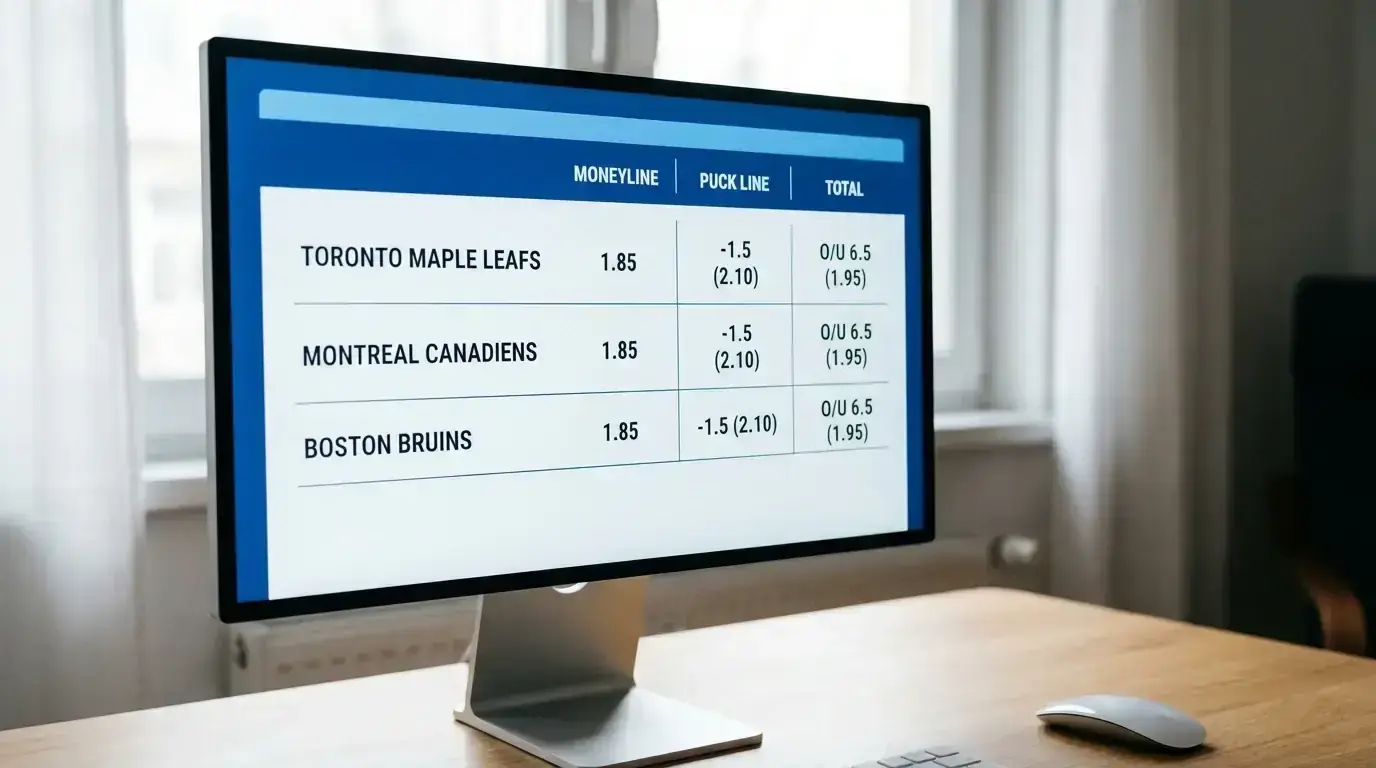
My personal preference is decimal. It's faster for mental arithmetic, easier for comparing across bookmakers, and far simpler when calculating multi-bet returns. Most UK betting apps let you switch format in settings — if you haven't already, I'd recommend switching to decimal for your hockey betting and keeping fractional for the sports where you've already built intuition. There's no reason to fight muscle memory on your strongest sport, but hockey is new ground, and decimal is the more efficient tool for new ground.
Live Hockey Betting: Why In-Play Matters
The first time I placed a live hockey bet, I was sitting in a pub with an NHL game on a grainy stream, and the home team had just gone on a power play after a questionable boarding call. The in-play odds shifted — not dramatically, but enough. I backed the home team's live moneyline at a price that reflected the score rather than the momentum. They scored on that power play, and the line snapped back. That entire sequence — from penalty whistle to goal — took about forty seconds. Live hockey betting operates on that kind of timeline.
50%+
Share of betting handle placed live (in-play) at major US operators in Q1 2025
68%
Share of sports revenue from in-play betting at one of the UK's largest operators
These numbers aren't hockey-specific, but they illustrate a structural shift in how people bet on all sports. Live wagering crossed 50% of total betting handle at DraftKings for the first time in early 2025, and one of the UK's largest operators has reported in-play contributing 68% of its sports revenue. The trend is unmistakable: bettors want to react to what they're watching, not commit hours before a game starts. Hockey, with its constant momentum shifts and discrete scoring events, is ideally suited to this style of wagering.
What makes hockey in-play betting particularly interesting is the frequency and impact of game state changes. A power play, a goaltender pull, a penalty kill, an icing call that forces a tired defensive line to stay on the ice — each of these events shifts the probability of the next goal, and the odds adjust in real time. The adjustments aren't always accurate, especially on lower-profile games where the bookmaker's live trading desk is thinner. That gap between the true probability shift and the odds adjustment is where live value lives.
Streaming access matters for live betting. If you're watching on a broadcast that runs 15-30 seconds behind the live feed, you're betting on information the bookmaker already has. Look for operators that offer integrated streaming or low-latency feeds for hockey. The delay difference between a satellite broadcast and a bookmaker's data feed can be the difference between catching a price and chasing it.

Live markets for hockey typically include running moneyline, next goal scorer, period winner, and adjusted totals. Some operators offer live player props during NHL games, though availability varies. The EIHL's live coverage is more limited — fewer operators offer in-play markets, and those that do tend to restrict the range to moneyline and basic totals. For a full breakdown of timing, discipline, and the specific live markets worth targeting, I've written a dedicated piece on in-play hockey betting strategy.
Using Data and Advanced Stats to Bet Smarter
I used to bet hockey like most people bet football — watching the game, forming an opinion, and backing the team that "looked better." My results were mediocre. Then I started using expected goals models, and my approach changed entirely. Not because the models are magic, but because they forced me to separate what happened from what should have happened. A team can win 4-1 while being outplayed at 5v5 for 50 minutes. The scoreboard says dominant; the data says lucky. Betting on which of those interpretations will persist is the core of analytical hockey wagering.
xG (expected goals) measures the quality of scoring chances based on shot location, shot type, and game situation. A shot from the slot is worth more than a shot from the blue line. A team generating 3.2 xG while scoring 1 goal is creating chances; a team generating 1.1 xG while scoring 3 goals is riding variance. Corsi counts all shot attempts (shots on goal + missed shots + blocked shots) as a proxy for puck possession. Fenwick does the same but excludes blocked shots, offering a slightly cleaner measure of offensive generation. GSAA (goals saved above average) quantifies how many goals a goaltender has saved compared to what a league-average netminder would have allowed on the same shots.
None of these metrics appeared in any of the top 10 hockey betting guides I reviewed when researching this market. That absence is staggering. These are the tools professional hockey analysts use to evaluate teams and players, and they're freely available through sites like Natural Stat Trick, Evolving Hockey, and MoneyPuck. Ignoring them in 2026 is like betting on football without looking at xG and expected points — technically possible, but deliberately handicapping yourself.
The goaltender variable deserves special emphasis. Karry Shreeve, Head of Hockey at Caesars Sportsbook, put it directly: a goaltender is worth 3 to 5% of implied probability, most of the time. That sounds small until you translate it into odds. A moneyline that opens at -120 (implied probability ~54.5%) can shift to -150 (implied probability ~60%) when a starting goaltender is replaced by a backup — a meaningful repricing that moves the value calculation on both sides of the bet. I've built a significant portion of my edge around goaltender confirmation timing, and I consider it the single most actionable piece of pre-game information in hockey betting.
| Eye Test Approach | Analytics Approach |
|---|---|
| Relies on watching games and forming qualitative judgments | Relies on structured data: xG, Corsi, Fenwick, GSAA, power play efficiency |
| Vulnerable to recency bias and narrative-driven thinking | Resistant to bias when models are applied consistently |
| Works best when combined with deep league knowledge | Works best when combined with contextual factors (injuries, schedule, travel) |
| Difficult to scale across many games per night | Scalable: data can screen all games for value before you watch any |
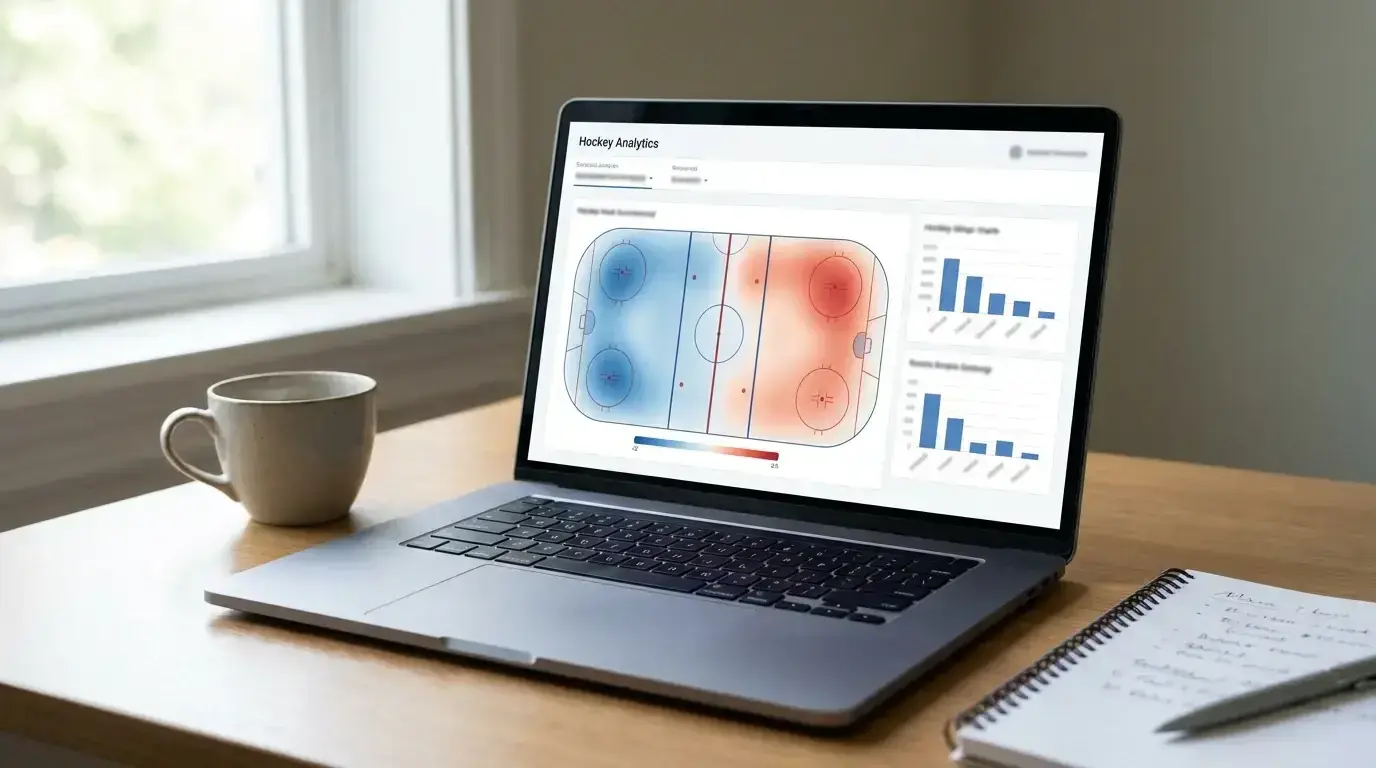
The ideal approach, in my experience, is a blend. I use analytics to screen for value — identifying games where the market price diverges from what the underlying data suggests — and then use the eye test to confirm or reject the data's story. A team with strong Corsi numbers but a struggling power play tells a different story than a team with strong Corsi and elite special teams. Context matters. But context without data is guesswork, and guesswork doesn't survive a 200-bet season. For a structured framework that ties these analytical tools into a repeatable process, I break it down in my hockey betting strategy guide.
Choosing a Hockey Bookmaker in the UK
I've held accounts with more bookmakers than I care to admit, and I can tell you that the difference in hockey coverage between operators is wider than in any other sport I've bet on. One operator will offer 30+ markets on an NHL game and cover every EIHL fixture. Another will list NHL moneylines and nothing else. A third will have decent NHL depth but zero EIHL coverage. The number of licensed betting premises in the UK has dropped to 5,789 — a 22.8% decline from pre-pandemic levels — but the online market has expanded to fill the gap, and the variation in hockey-specific quality across online platforms is enormous.
Choosing the right bookmaker for hockey isn't the same as choosing one for football. The criteria shift. Market depth matters more than brand recognition. Odds format flexibility matters because you'll be reading American odds from NHL analysts and need to work fluidly across formats. Live betting interface matters because hockey games move fast and a clunky in-play platform costs you entries. And the speed at which an operator updates its hockey lines — particularly around goaltender announcements — tells you a lot about how seriously they take the sport.
Hockey bookmaker evaluation checklist
- UKGC licence confirmed and visible on site
- NHL coverage with moneyline, puck line, totals, and player props
- EIHL coverage (at minimum, match winner markets)
- International tournament coverage (IIHF Worlds, CHL)
- Three odds formats available (fractional, decimal, American)
- Functional live betting interface with real-time odds updates
- Streaming or low-latency data access for in-play wagering
- Responsible gambling tools: deposit limits, cooling-off, self-exclusion
The Betting and Gaming Council has emphasised that licensed members operating in Britain follow strict rules on consumer protection, safer gambling, and robust financial safeguards — in contrast to unlicensed black-market operators that observe none of these standards. This is not an abstract distinction. When you're depositing money and placing bets, the regulatory framework your operator sits within determines the protections available to you if something goes wrong. A UKGC licence is the floor, not the ceiling.
Market depth
Count the number of hockey markets per game, not just whether the sport is listed. An operator with 5 markets per NHL game is functionally different from one with 40.
Odds competitiveness
Compare opening prices for the same NHL game across three or four operators. A 0.05 difference in decimal odds over hundreds of bets compounds into a meaningful edge — or a meaningful deficit.
Niche coverage
Does the operator cover the EIHL, the Champions Hockey League, or the IIHF Worlds? Niche coverage signals that the operator takes hockey seriously rather than treating it as a token offering.

I maintain active accounts with multiple operators specifically for line shopping — comparing odds across bookmakers to ensure I'm always getting the best available price. New UK-facing operators have been adding niche sports markets at a rate 34% faster than mainstream categories, which means the competitive landscape is shifting in favour of hockey bettors. More operators covering hockey means more competition on pricing, which means better odds for you. That dynamic wasn't true five years ago, and it's one of the strongest reasons to take hockey betting seriously now.
Safer Gambling and Hockey Betting
I want to be direct about something that most betting guides treat as an afterthought. I've seen people I know develop gambling problems. Not abstract statistics — real people, in my life, who started with disciplined approaches and ended up chasing losses at 3am on their phones. The fact that I write about betting professionally doesn't make me immune to these risks, and it certainly doesn't make you immune. Every number I've shared in this guide is designed to help you bet more effectively, but effectiveness without discipline is just a faster route to trouble.
Gambling involves risk. You can lose more than you deposit. If you or someone you know is struggling with gambling, contact the National Gambling Helpline on 0808 8020 133, available 24/7. You can also self-exclude via GamStop, which covers all UKGC-licensed online operators.
The data on problem gambling in the UK is sobering. Approximately 2.7% of UK adults — around 1.4 million people — score 8 or more on the Problem Gambling Severity Index, indicating moderate-risk or problem gambling. Among online sports bettors specifically, 8.9% meet the criteria for problem gambling — a figure from the Lancet Public Health Commission's comprehensive assessment of global gambling harms. The same Commission found that 46.2% of adults worldwide had gambled within the past year, and projected net consumer losses reaching $700 billion by 2028. These are not minor numbers, and the Commission was unequivocal in its conclusion: gambling poses a threat to public health, requiring substantial expansion and tightening of industry regulation.
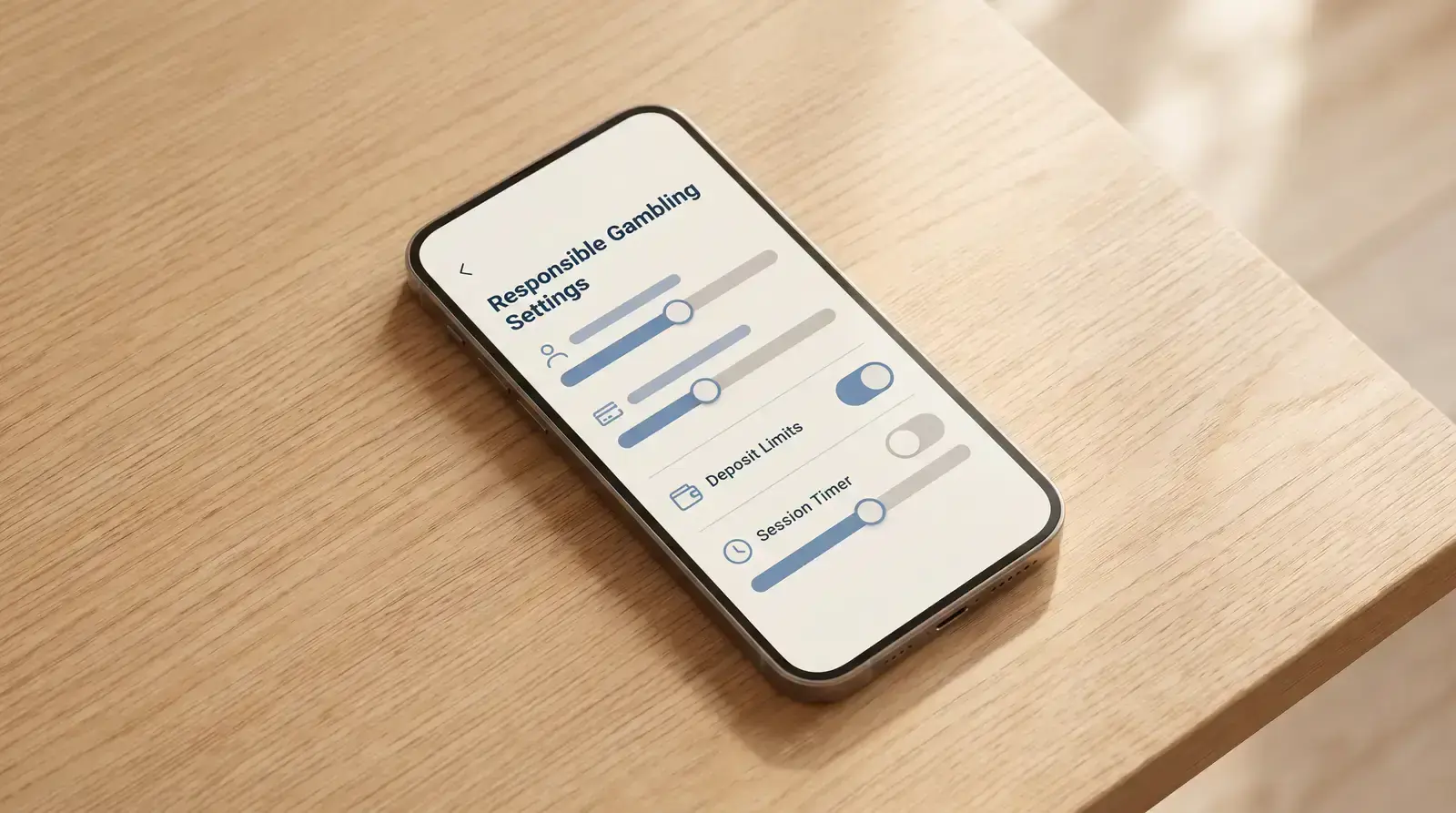
What this means for you as a hockey bettor is straightforward. Set deposit limits before you place your first bet. Use the cooling-off and self-exclusion tools that every UKGC-licensed operator is required to offer. Track your results honestly — not just your wins. And if you notice that betting is causing stress, financial pressure, or conflict in your life, stop. The edge I've described throughout this guide exists, but it requires hundreds of bets to materialise, and no single bet is ever worth your wellbeing.
I track every bet I place in a spreadsheet. Not just for strategy optimisation — though it serves that purpose — but as a reality check. When you see your full record, including every loss, it's much harder to construct the selective narrative that problem gambling thrives on. Transparency with yourself is the first and most important safeguard.
Hockey Betting Questions Answered
What is the puck line in hockey betting?
The puck line is hockey's version of the point spread, set at +-1.5 goals. If you back the favourite at -1.5, they must win by 2 or more goals for the bet to land. If you back the underdog at +1.5, they can lose by a single goal and your bet still wins. Alternative puck lines (+-0.5, +-2.5) are available at some operators, offering different risk-reward profiles. Because hockey is a low-scoring sport, the standard 1.5-goal line carries more weight than equivalent spreads in higher-scoring sports.
How do overtime and shootout rules affect my hockey bet?
It depends entirely on the market. A full-game moneyline includes overtime and the shootout — there's always a winner. A regulation-time (60-minute) moneyline settles after three periods, so a game that's tied at the end of regulation is a draw in that market. Puck line bets at most UK bookmakers include overtime and shootout goals, but this varies by operator, so always check the settlement rules. Totals (over/under) markets typically include overtime scoring but exclude the shootout, since a shootout adds only one goal regardless of how many rounds are taken.
What should I look for in a UK hockey betting site?
Start with a UKGC licence — non-negotiable. Beyond that, evaluate hockey-specific market depth (how many markets per NHL game, whether EIHL is covered), odds format flexibility, the quality of the live betting interface, and available streaming or data feeds for in-play wagering. I also recommend checking whether the operator offers same-game parlay or Bet Builder functionality for hockey, as this has become a meaningful part of the market. Responsible gambling tools — deposit limits, session timers, self-exclusion — should be accessible and clearly labelled.
How does the starting goaltender affect hockey betting odds?
The goaltender is the most impactful single-position variable in hockey betting. A switch from a team's starting goaltender to their backup can shift the implied probability of the outcome by 3-5%. In practical terms, a moneyline that opens at -120 (about 54.5% implied probability) might move to -150 (about 60%) or wider after a goaltender change. Monitoring goaltender confirmations — which typically drop during morning skate on game day — is one of the most actionable pre-game information advantages available to hockey bettors.
Can I bet on the EIHL with UK bookmakers?
Yes, though coverage varies significantly between operators. Some UK bookmakers offer match winner markets on every EIHL fixture, while others cover only selected games or high-profile matchups like the Challenge Cup and Playoff Finals. Market depth is generally limited compared to the NHL — you'll often find only moneyline and sometimes basic totals, with player props rarely available. The coverage is expanding season by season as EIHL attendance and visibility grow, but if EIHL betting is a priority, you'll want to check multiple operators to find the best coverage.
What is a same-game parlay in hockey?
A same-game parlay (SGP) combines multiple selections from a single game into one bet. For example, you might combine a team to win on the moneyline, the game to go over 5.5 total goals, and a specific player to score. The odds compound, creating a higher potential payout than any individual leg. The trade-off is that every leg must win for the bet to pay out. Bookmaker-specific versions of this feature go by names like Bet Builder, Same Game Multi, or Request a Bet. Availability for hockey varies by operator, and it's more commonly offered on NHL games than EIHL.
How do advanced stats like xG help with hockey betting?
Expected goals (xG) models measure the quality of scoring chances a team creates and concedes, based on factors like shot location, shot type, and game situation. For bettors, xG reveals whether a team's results are sustainable or driven by variance. A team consistently generating more xG than their opponents but underperforming on the scoreboard is likely to regress upward — offering value on their moneyline or over totals. Similarly, a team outscoring their xG is riding unsustainable shooting luck and may regress downward. Free xG data for NHL teams is available through several public analytics sites and should be part of any serious hockey bettor's research process.
