


Why Most Hockey Betting Bonuses Aren’t as Good as They Look
The first welcome bonus I claimed promised “£50 in free bets.” What it didn’t mention prominently was the 5x wagering requirement at minimum odds of 1/2, the 7-day expiry, and the restriction that free bet stakes weren’t included in any returns. After working through the maths, that “£50 in free bets” had an actual expected value of about £12. Still worth claiming? Yes. Worth getting excited about? Not remotely.
The number of physical bookmaker shops in the UK fell to 5,789 by early 2025-26 — a 22.8% decline from pre-pandemic levels. That contraction on the high street has pushed operators to compete more aggressively online, and bonuses are a primary weapon in that competition. But the headline numbers on bonus offers are marketing tools, not realistic assessments of what you’ll receive. Every bonus comes with terms and conditions that reduce its real value, and understanding those terms is the difference between extracting genuine value and wasting your time.
Hockey-specific bonuses are rare. Most welcome offers at UK bookmakers apply across all sports, and hockey is simply one of many markets you can use them on. Occasionally, an operator will run a hockey-specific promotion during the NHL playoffs or a major international tournament, but these are uncommon. The practical approach is to evaluate general sports bonuses through the lens of how effectively they can be deployed on hockey markets.
Types of Hockey Betting Bonuses Available in the UK
Welcome bonuses typically fall into three categories: free bets, matched deposits, and risk-free first bets. Each works differently, and each has different implications for hockey bettors.
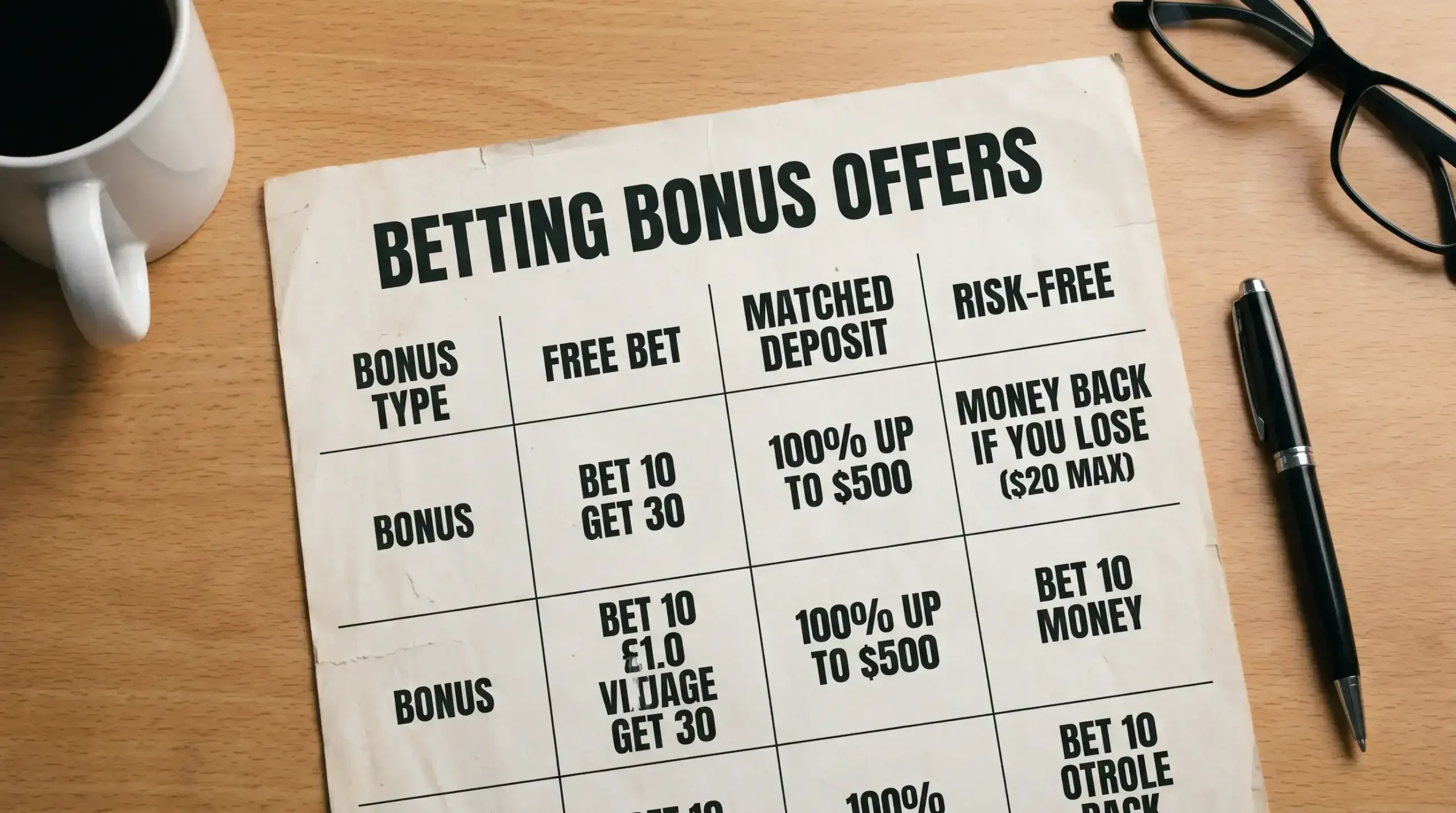
Free bets give you a specified stake to place at no cost. If the bet wins, you receive the profit but not the stake back. A £10 free bet at odds of 2.00 returns £10 profit (not £20). The key variables are: minimum qualifying deposit, minimum odds required, expiry period, and whether the free bet can be used on any market or is restricted to specific bet types. New UK bookmakers have been adding niche sports markets at a rate of roughly 34% per year, and as hockey coverage expands, more operators are allowing free bets to be used on hockey markets specifically.
Matched deposits add bonus funds equal to a percentage of your first deposit, typically subject to wagering requirements. A “100% matched deposit up to £50” means depositing £50 gives you £50 in bonus funds, which must be wagered a specified number of times (often 3x-6x) before you can withdraw any winnings. The wagering requirement is the critical factor. A 3x requirement on £50 means betting £150 in total before withdrawal. A 6x requirement means £300 — and at the average sportsbook hold of 10.15%, you’d expect to lose roughly £30 of that £300 in wagering, reducing the bonus’s real value significantly.
Risk-free first bets refund your initial bet as a free bet if it loses. This sounds excellent, and it’s the highest expected-value bonus type for hockey bettors. The optimal strategy is to place your qualifying bet at the longest odds you’re comfortable with, because the refund comes as a free bet if you lose — and the longer the odds of that free bet, the more value you extract. I use risk-free first bets on hockey futures or outright markets where the odds are long enough to maximise the free bet’s expected value.
How to Evaluate a Hockey Free Bet Offer
Every bonus offer should be evaluated by calculating its expected value after terms and conditions. Here’s a simplified framework I use.

Start with the headline bonus amount. Subtract the expected cost of meeting the wagering requirement (wagering amount multiplied by the average bookmaker margin on the markets you’ll use). Apply the free bet conversion rate (typically 70-80% of face value for free bets where the stake isn’t returned). The result is the bonus’s true expected value.
For a £20 free bet with no wagering requirement, the expected value is approximately £14-£16 (70-80% of £20, depending on the odds you use the free bet at). For a £50 matched deposit with a 5x wagering requirement, the expected value might be £50 minus roughly £25 in expected wagering losses, giving you a true value of around £25. These calculations take two minutes and prevent you from chasing bonuses that cost more in wagering than they return in value.
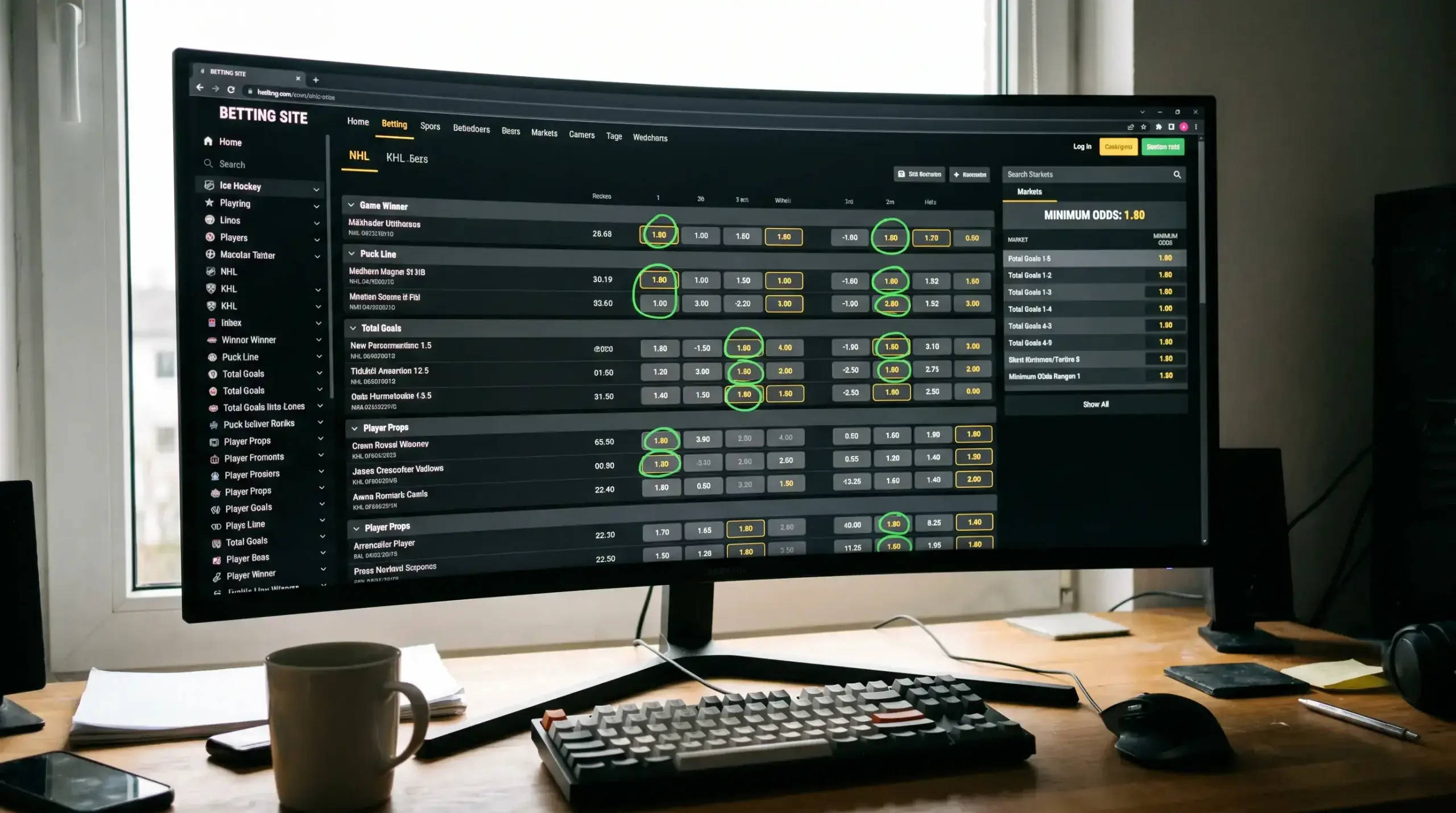
One factor specific to hockey: minimum odds requirements. Many bonuses require bets at minimum odds of 1/2 (1.50 decimal) or higher. Most NHL moneyline favourites are priced below this threshold, which means you can’t use the bonus on the bet you actually want to make. Check whether the minimum odds requirement is compatible with hockey markets before claiming the offer. Totals and puck line bets typically offer odds above the minimum threshold, making them better vehicles for bonus wagering than short-priced moneylines.
Using Bonuses on Hockey Markets Without Wasting Them
The Betting and Gaming Council has emphasised that licensed UK operators follow strict rules on consumer protection, and bonus terms are part of that regulatory framework. Within those rules, there are smart and less smart ways to deploy bonuses on hockey.

Use free bets on markets with odds between 3.00 and 6.00 (2/1 to 5/1). This range maximises the expected value of a free bet where the stake isn’t returned. Underdog moneylines, period correct score markets, and first goalscorer props often fall in this range. Don’t waste a free bet on a heavy favourite at 1.30 — the expected return is poor relative to the same free bet placed at longer odds.

Meet wagering requirements on markets where you have a genuine analytical edge, not on random bets placed purely to clear the requirement. If you need to wager £150 to unlock a bonus, those £150 in bets should be selections you’d make anyway as part of your normal hockey betting. Forcing bets on markets you don’t understand or games you haven’t analysed turns the wagering requirement from a hurdle into a loss generator.
Don’t let bonus chasing distort your bankroll management. A £30 bonus isn’t worth risking your staking discipline for. If claiming a bonus requires you to bet more than your usual unit size or bet on more games than your process supports, the bonus is costing you more than it’s worth. Integrate bonuses into your existing framework — choosing the right bookmaker for bonuses means finding operators whose terms align with how you already bet, not changing how you bet to match the terms.
