
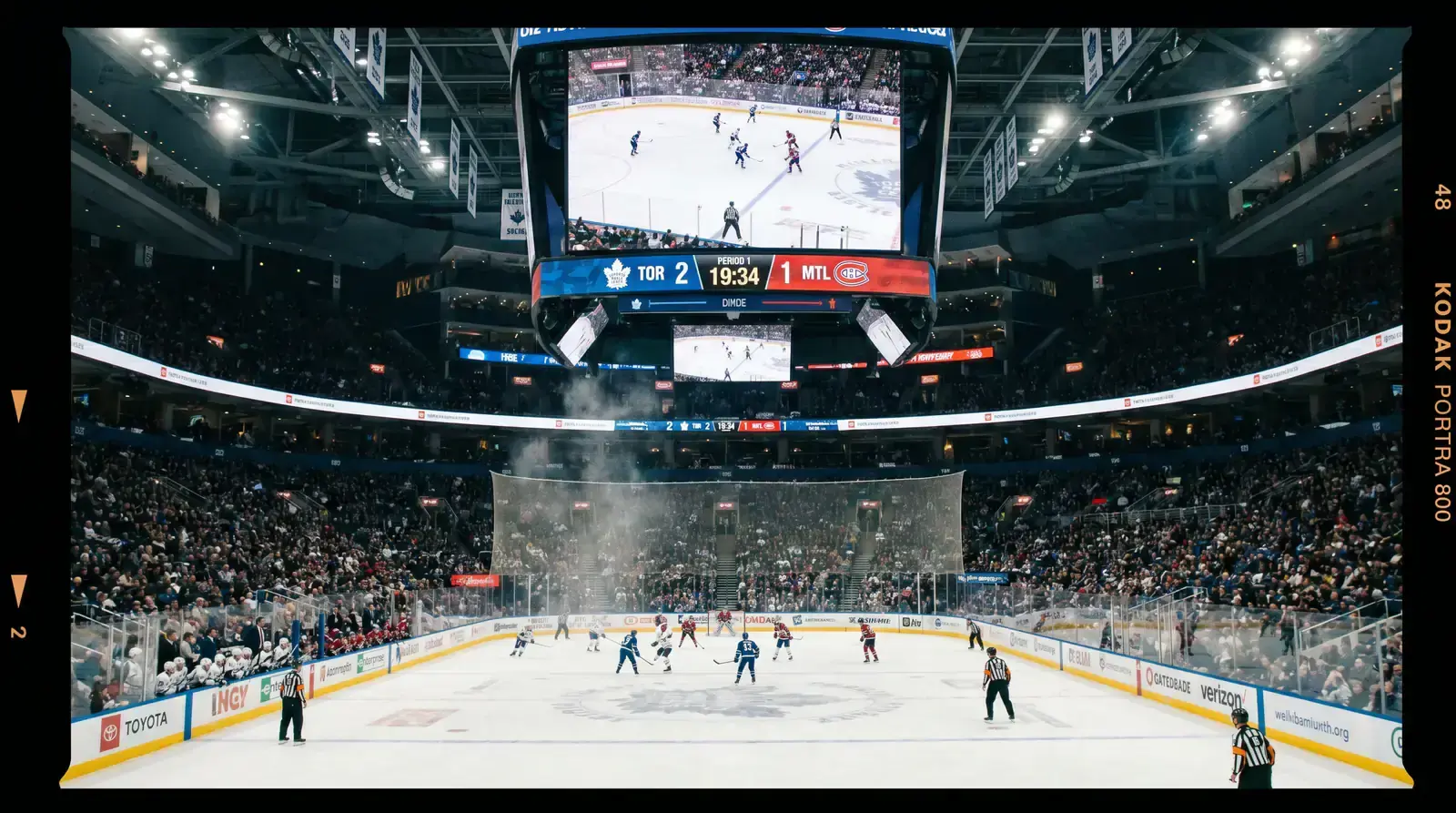

Betting on Periods: A Game Within the Game
I stumbled onto period betting when a full-game over 6 lost on a 4-2 final, and I realised that all four goals came in the second period while the other two periods were scoreless. That game taught me something valuable: the 60-minute total can mask wildly different scoring profiles across the three periods. Period betting lets you exploit those differences instead of averaging them away.
NHL totals usually open around 6 or 6.5 for the full game. Break that into three periods, and each period’s total typically sits at 1.5 goals. The pricing around that 1.5 — whether the under or the over carries more juice — tells you where the bookmaker expects the scoring to land. But the bookmaker’s period-level models are less refined than their full-game models, which is precisely why this market rewards research.
Period betting offers three standalone 20-minute games within a single match, each with its own scoring dynamics, tactical considerations, and pricing. For bettors who understand how game flow works in hockey — how teams approach different periods based on score, strength of schedule, and coaching philosophy — it’s one of the most underexploited markets available.
Period Markets Available at UK Bookmakers
The standard period betting menu at UK bookmakers includes three main market types. Period winner is a three-way market — Team A wins the period, Team B wins the period, or the period ends in a draw. Period totals set a line (usually 1.5) and ask you to bet over or under. Correct score for the period offers specific scoreline predictions, though this is less commonly available.

Period winner is the market I trade most frequently. The draw is the outcome that most bettors undervalue, and it happens more often than you’d think. Across the NHL, approximately 35-38% of individual periods end in a draw (0-0 or 1-1). That’s a higher draw rate than in football. If the period draw is priced at +200 or longer, the value is often there.
Some bookmakers also offer “highest-scoring period” as a game-level prop, and a few offer “scoreless period” yes/no markets. These niche markets are priced with wider margins because they attract less volume, but they occasionally present value when the matchup features two teams with extreme scoring patterns — for example, a team that consistently outscores opponents in the second period facing one that dominates the third.
Coverage depth is inconsistent. Major NHL games typically receive the full period betting treatment. Smaller regular-season games and EIHL fixtures may only offer period winner or nothing at all. If you’re building a period betting strategy, you need a bookmaker that consistently offers these markets across the NHL schedule.
NHL Scoring Distribution by Period
The share of live betting in total handle exceeded 50% at DraftKings in early 2025, and much of that live action comes during specific game moments tied to period transitions. Understanding when goals happen is fundamental to both pre-game period bets and in-play decisions.

Across the NHL, scoring distributes roughly evenly across the three periods, with a slight skew toward the third. The typical split over a full season runs approximately 31-32% of goals in the first period, 33-34% in the second, and 34-35% in the third. That third-period bump comes from two sources: empty-net goals when the trailing team pulls their goaltender, and the increased desperation of a team chasing the game.
But league-wide averages obscure enormous team-level variation. Some teams are notorious fast starters, scoring heavily in the first period and then sitting on their lead. Others are slow starters who concede early and rely on second- and third-period rallies. These patterns are remarkably stable within a season — a team that scores 36% of its goals in the first period in October is likely to maintain that skew through March. Tracking team-level period scoring splits is a straightforward exercise that produces directly actionable betting intelligence.
One pattern I’ve documented: when two historically slow-starting teams meet, the first-period under 1.5 hits at an elevated rate, and the pricing doesn’t always account for it. The bookmaker’s model uses league-wide scoring rates as a starting point and applies limited team-level adjustment. That’s where your edge lives.
Tactical Angles for Period Betting
Three tactical angles have produced consistent results for me in period betting, and each one requires a different analytical approach.
The first is the second-period surge angle. Coaches make tactical adjustments at the first intermission based on what they observed in the opening frame. Teams with strong coaching staffs — those known for adaptive in-game management — tend to improve in the second period relative to the first. When I see a game where both teams played a cautious first period (scoreless or 1-0), I look at the second-period over with fresh eyes. The tactical adjustments and increased willingness to take risks often produce a spike in scoring.

The second angle is the third-period game state play. If a game is tied or within one goal entering the third period, the scoring dynamics change dramatically. The trailing team pushes harder, creating more chances but also more counter-attacking opportunities for the leading team. Third-period overs in close games hit at a higher rate than in games where one team holds a comfortable lead. Checking the score at the second intermission and then assessing the third-period total is a simple live betting workflow that I use multiple times per week during the season.

The third angle is goaltender fatigue in the third period. Goaltenders who have faced 30 or more shots through two periods show measurable save percentage declines in the third. The effect is modest — roughly a 1-2% drop in save percentage — but on a volume of 10-15 shots per period, that translates to an additional 0.1-0.3 expected goals. When combined with the tactical factors above, it pushes third-period overs into value territory more often than the market recognises.

Period betting demands a different mindset from full-game wagering. You’re not predicting who wins or how many goals the game produces. You’re predicting the rhythm of a specific 20-minute segment, and that rhythm is driven by team tendencies, coaching decisions, and game state — all of which you can research and quantify before the puck drops.
