
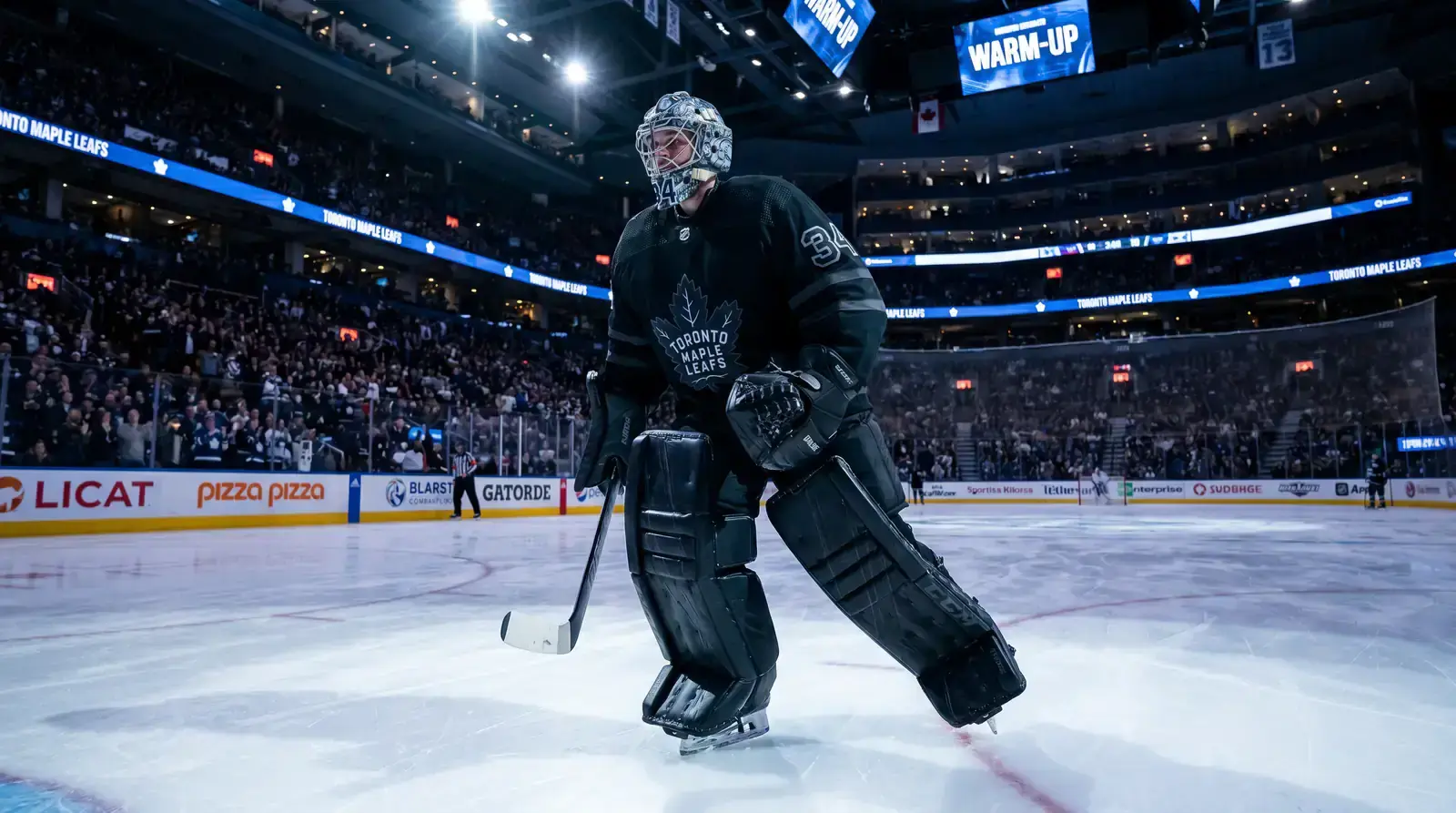

The Most Important Pre-Game Variable in Hockey Betting
In February 2024, I watched a moneyline swing from -150 to -115 in the space of twenty minutes. Nothing had changed about the teams, the venue, or the schedule. The starting goaltender had been swapped. Karry Shreeve, who manages hockey odds at Caesars Sportsbook, quantifies this effect precisely: a goaltender change is worth 3 to 5% of implied probability, and sometimes more. That range — 3 to 5% — might sound modest until you translate it into odds and realise it’s the difference between a bet that has value and one that doesn’t.
No other pre-game variable in hockey moves lines with such consistency. Injuries to star forwards, trade-deadline acquisitions, even coaching changes — none of them trigger the immediate, measurable repricing that a goaltender swap does. The reason is structural. A goaltender touches every defensive play. A forward might take 20 shifts in a game; the goaltender plays all 60 minutes. His save percentage directly determines how many goals the opposing team scores, and goals are the only currency that matters in a sport where totals open around 6 or 6.5.
For UK bettors accustomed to football, the closest parallel would be if the bookmaker moved the odds every time a specific centre-back was dropped. But even that understates it, because no outfield player in football has the individual impact on results that a top goaltender has in hockey.
Quantifying the 3-5% Implied Probability Shift
Let me put real numbers to this. A team is favoured at -150 on the moneyline, which translates to an implied probability of 60%. The starting goaltender is announced and it’s the backup, not the starter. That 3-5% shift drops the implied probability to 55-57%, moving the moneyline to roughly -125 to -130. On the other side, the opposing team’s implied probability rises from 40% to 43-45%, improving their moneyline from around +130 to +110 or shorter.

The effect cascades into every related market. The puck line shifts because a team with a weaker goaltender is less likely to win by two goals. Totals may nudge upward because a backup goaltender typically concedes more goals on a per-game basis. Player props for the opposing team’s forwards become more attractive because they’re shooting against a less accomplished netminder.
Where it gets interesting is the asymmetry. The shift isn’t always a clean 3-5%. When the backup goaltender is a known quantity with a strong track record — a veteran who splits starts and carries a .910+ save percentage — the market moves only 2-3%. When the backup is a young prospect with limited NHL experience and a save percentage below .900, the shift can exceed 5%. I’ve tracked games where a surprise backup announcement moved the moneyline by the equivalent of 7-8% implied probability. Those outlier moves are rare, but they represent some of the most valuable betting opportunities of the season.
The key metric to watch is career save percentage, but context matters. A goaltender with a .905 career save percentage in 30 NHL starts is a very different proposition from one with .905 in 150 starts. Sample size determines how much you should trust the number, and small-sample goaltenders introduce uncertainty that the market often misprices.
When Goaltender Confirmations Drop and How to React
Timing is everything in this market. NHL goaltender confirmations typically arrive through two channels: the morning skate and official team announcements. Morning skate information filters out between 10:30am and 12:00pm local time — that’s roughly 3:30pm to 7:00pm UK time, depending on the time zone. Official confirmations usually follow within an hour of morning skate.

The window between the first rumour and the official confirmation is where the line moves fastest. Sharp bettors and betting syndicates monitor morning skate reports from team beat reporters and act immediately. By the time the bookmaker adjusts the line, the smart money has already taken the best price. If you’re betting from the UK and can’t monitor morning skate reports in real time, you’re working with the adjusted line — which still has value, but less than the initial price.
I’ve built a routine around this. On days when I have strong pre-game opinions, I place conditional decisions the night before: “If Goaltender A starts, I bet this line. If Goaltender B starts, I pass or bet the other side.” This removes the emotional pressure of reacting in real time and ensures I’m making decisions based on predetermined analysis rather than in-the-moment impulse.
Some bookmakers now offer “goaltender confirmed” markets — bets that are only valid once the starting goaltender is officially announced. These niche markets eliminate the risk of your bet being placed before a surprise change, but they also mean you’re betting at the post-confirmation price, which has already absorbed the sharp money. It’s a trade-off between certainty and value.
Finding Value When the Backup Starts
The public overreacts to backup goaltender starts. This is the single most consistent finding across my six years of tracking goaltender-related line movements. When a backup starts, the moneyline moves against that team by 3-5% in implied probability — but the actual performance gap between starters and backups, measured across a full season, is closer to 2-3% in save percentage terms.

That gap between market reaction and actual performance is where value lives. A team with a backup goaltender whose save percentage sits at .910 is not dramatically worse than the same team with a starter at .920. The difference is approximately one additional goal conceded every 30-35 shots faced. Over a single game, that’s a real but modest impact — roughly 0.3-0.5 additional goals expected.

I look for two specific scenarios. The first is a strong offensive team starting its backup against a weak opponent. The market marks the team down for the goaltender swap, but the team’s offensive firepower remains unchanged. If you believe the team will score four or five goals regardless of who’s in net, the backup goaltender’s slightly lower save percentage becomes irrelevant to the moneyline.
The second scenario is a planned rest day for the starter on the front end of a back-to-back. Coaches frequently rest their starting goaltender for the first game of a back-to-back, saving them for the second. In these cases, the backup start is anticipated and the line adjusts in advance. But the adjustment often overshoots, creating value on the team with the backup — particularly when the backup is a reliable veteran who handles planned starts well.

Goaltender analysis isn’t optional for serious hockey bettors. It’s the single most actionable pre-game variable, it moves lines more than any other factor, and the market’s reaction to it is consistently imperfect. Learning to read, time, and exploit goaltender announcements is the closest thing to a repeatable edge that hockey betting offers.
