
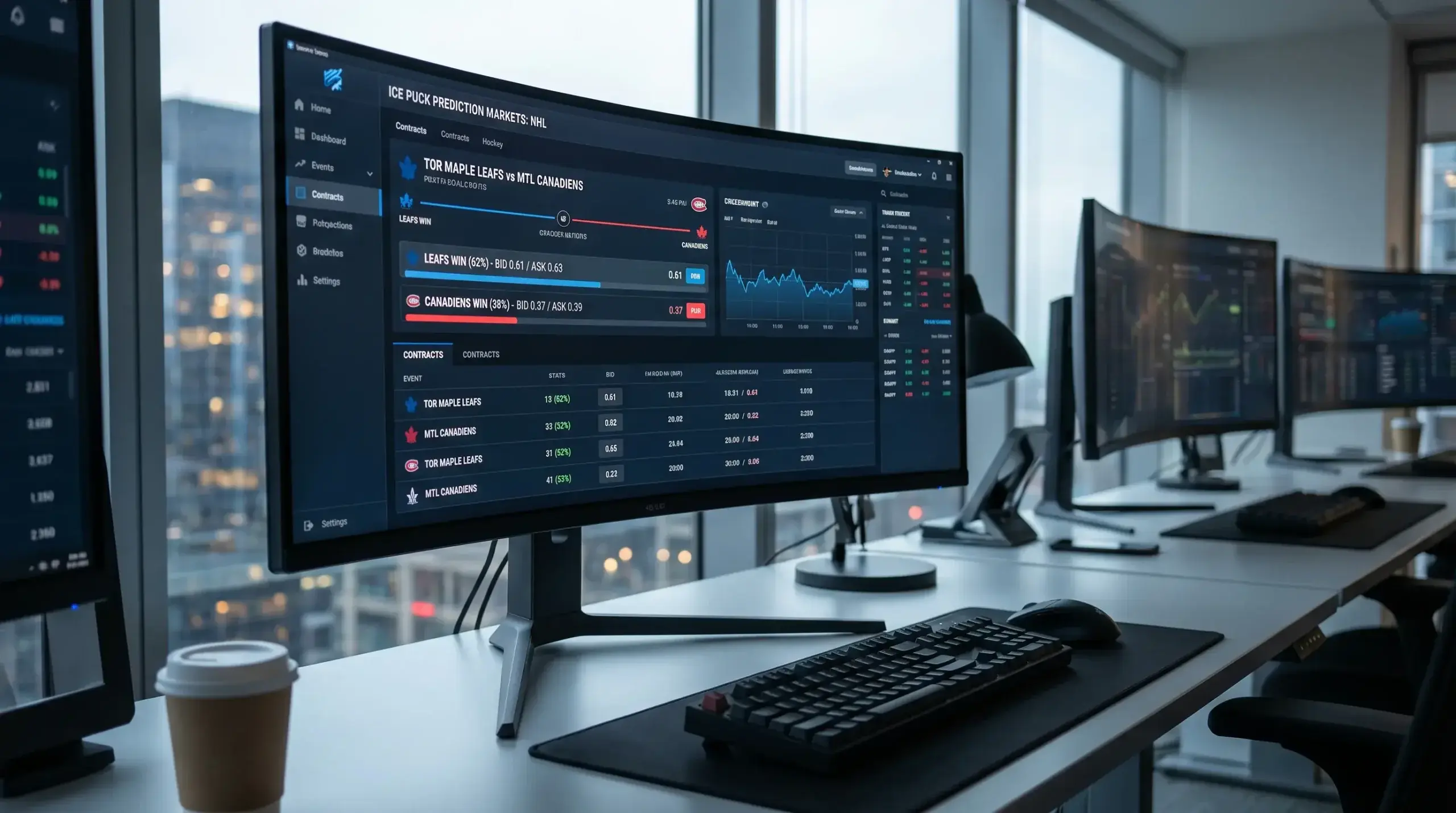

A New Category of Hockey Wagering Arrives
In October 2025, the NHL became the first major sports league to sign a marketing partnership with both Kalshi and Polymarket — two regulated prediction market platforms. That deal wasn’t just a sponsorship agreement. It signalled that a fundamentally different way of wagering on hockey had moved from the fringes into the mainstream, with the blessing of the league itself.
Prediction markets let you buy and sell contracts on the outcomes of events — “Will Team X win the Stanley Cup?” or “Will the NHL season’s total goals exceed 8,000?” — at prices that fluctuate like stocks on an exchange. Instead of placing a bet with a bookmaker at fixed odds, you trade contracts with other participants at prices determined by supply and demand. The concept has existed in political forecasting for years. Its arrival in professional hockey betting changes the competitive landscape for anyone who wagers on the sport.
How Prediction Markets Differ from Traditional Bookmakers
The mechanics are different, but the underlying principle is the same: you’re expressing a view on probability and risking money on it. Kalshi’s CEO, Tarek Mansour, described the NHL partnership as a testament to the integrity and consumer trust that regulated prediction markets have built. The distinction from traditional bookmakers lies in three areas: pricing, liquidity, and market structure.
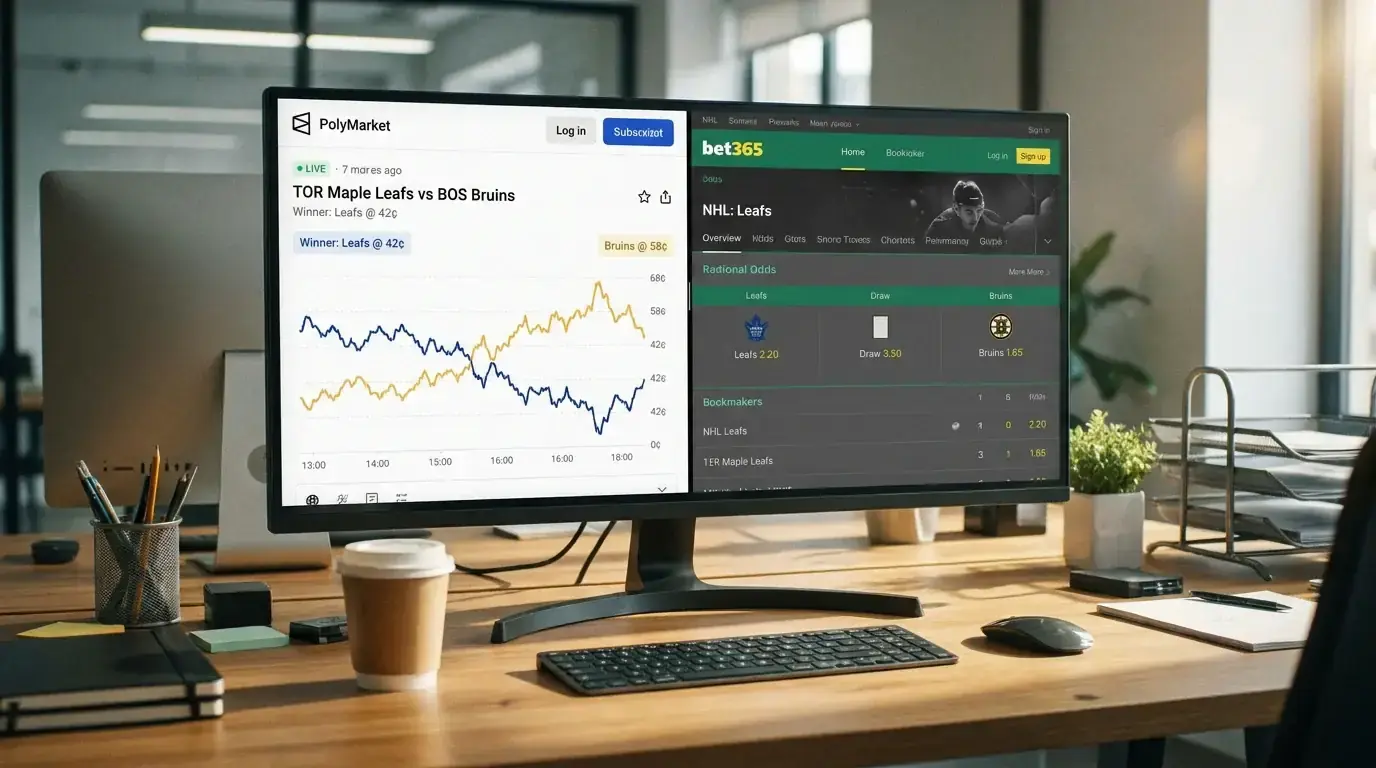
Pricing in a prediction market is set by the participants, not by a bookmaker’s odds compiler. If you believe the contract “Team X wins the Stanley Cup” is underpriced at 15 cents (implying a 15% probability), you buy it. If enough other participants agree, the price rises. If the consensus view shifts against Team X, the price falls. This mechanism means that prediction market prices incorporate information from all participants simultaneously, often producing prices that reflect true probabilities more accurately than bookmaker odds — which include a margin that prediction markets don’t carry in the same way.
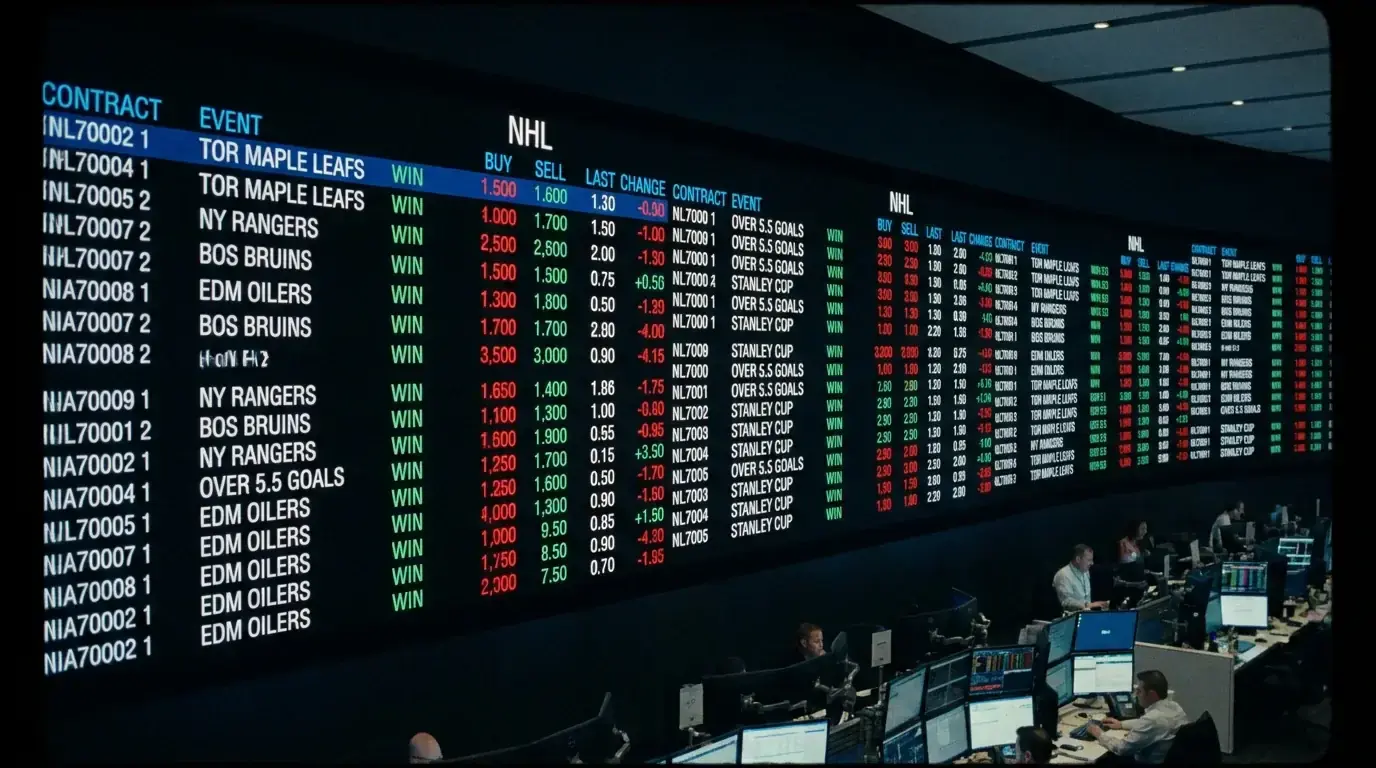
Liquidity is the catch. Traditional bookmakers guarantee you a price and accept your bet instantly. Prediction markets require a counterparty — someone willing to take the other side of your trade. For popular markets like Stanley Cup winner or conference champions, liquidity is developing. For obscure markets, you may not find a counterparty at the price you want. This is a structural limitation that makes prediction markets better suited to futures and outright markets than to game-by-game wagering.
Nielsen Sports and the American Gaming Association estimated that legalised sports betting could bring the NHL an additional $216 million in annual revenue through increased content consumption and advertising spend. Prediction markets represent a new channel within that revenue opportunity, operating alongside rather than replacing traditional bookmakers.
Can UK Residents Access Hockey Prediction Markets?
This is the critical question for UK bettors, and the answer is nuanced. Kalshi operates under CFTC regulation in the United States and is not currently licensed to offer event contracts to UK residents. Polymarket, which operates on blockchain infrastructure, exists in a regulatory grey area that varies by jurisdiction. UK residents should check the current regulatory status before attempting to access either platform, as the legal landscape is evolving.

The UK’s Gambling Commission has signalled interest in how crypto-based wagering products fit within the existing regulatory framework. Tim Miller, the Commission’s Executive Director, has discussed potential pathways for crypto assets as consumer payment options within licensed and regulated gambling in Great Britain. This suggests that prediction markets — or products resembling them — may eventually become available to UK residents through regulated channels, but the timeline is uncertain.
In the meantime, UK bettors can observe prediction market prices as an information source even if they can’t trade on the platforms directly. Prediction market prices for NHL futures provide an additional data point for assessing whether traditional bookmaker odds offer value. If a prediction market prices a team’s Stanley Cup probability at 12% and a UK bookmaker offers the same team at odds implying 8%, that discrepancy is worth investigating.
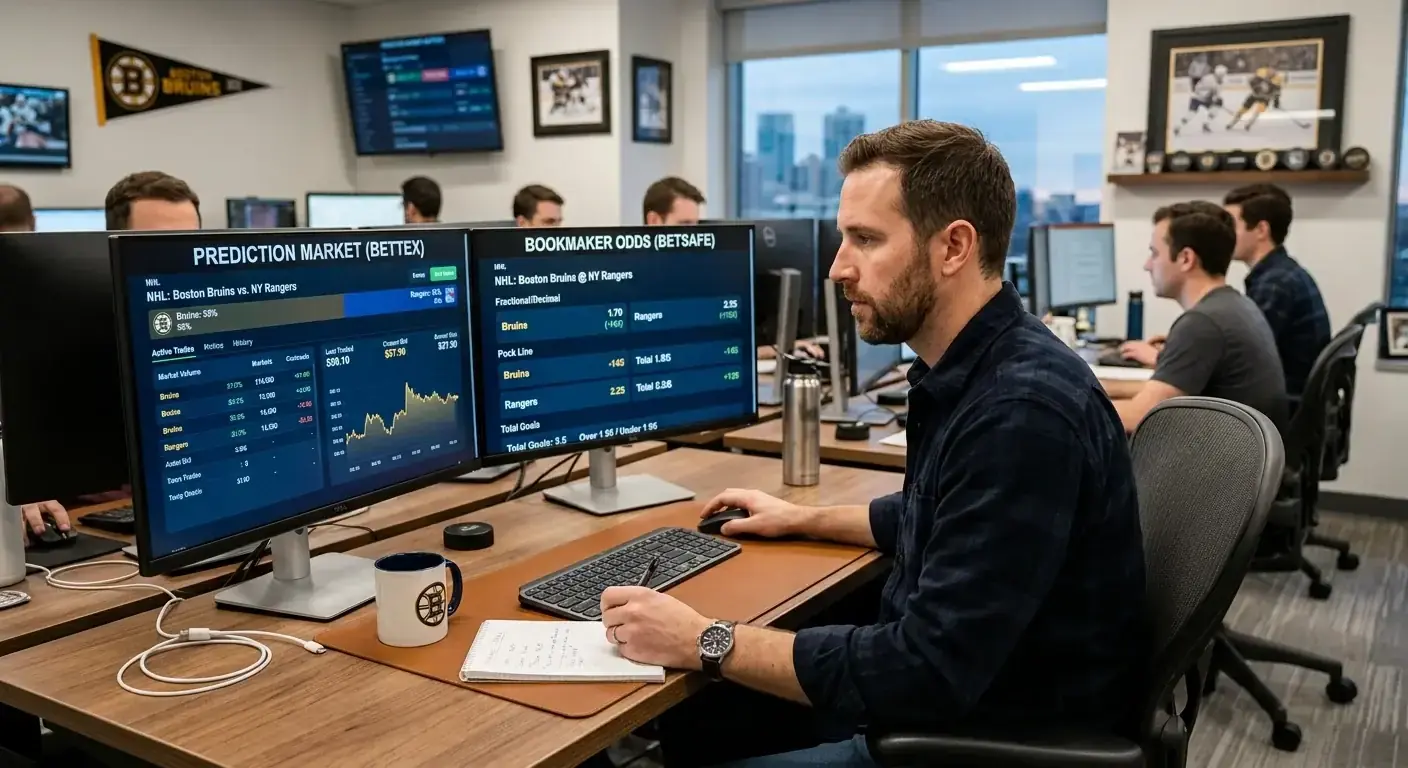
The information value cuts both ways. Prediction markets aggregate views from a different pool of participants than traditional bookmakers — often including data scientists, quant traders, and sports analysts who approach pricing from a financial markets perspective rather than a sports betting one. Their collective view isn’t always right, but it’s derived from a different analytical framework, which makes it a useful cross-check against your own analysis. When prediction market prices and your own assessment agree but disagree with the bookmaker, your conviction should increase. When all three diverge, it’s a signal to re-examine your assumptions rather than charge ahead.
What Prediction Markets Mean for Traditional Hockey Betting
The emergence of prediction markets doesn’t make traditional NHL betting obsolete. The two formats serve different purposes. Traditional bookmakers offer game-level markets with guaranteed liquidity and instant settlement. Prediction markets excel at longer-term, event-level questions where the crowd’s aggregated view produces efficient pricing.

For sharp bettors, prediction markets add another tool to the analytical toolkit. When prediction market prices and bookmaker odds diverge on the same question — say, Stanley Cup winner — the divergence itself is information. It might indicate that the bookmaker is slow to adjust to new information, or that the prediction market is being moved by noise traders. Either way, the divergence invites analysis rather than blind action.
The NHL’s willingness to partner with prediction market platforms also signals broader industry acceptance of alternative wagering formats. As these platforms mature and potentially become accessible to UK residents, the hockey betting ecosystem will become more complex and more competitive. Bettors who understand how prediction markets work now will be better positioned to use them effectively when access opens up. Those who dismiss them as a curiosity may find themselves at a disadvantage against better-informed competitors.
