
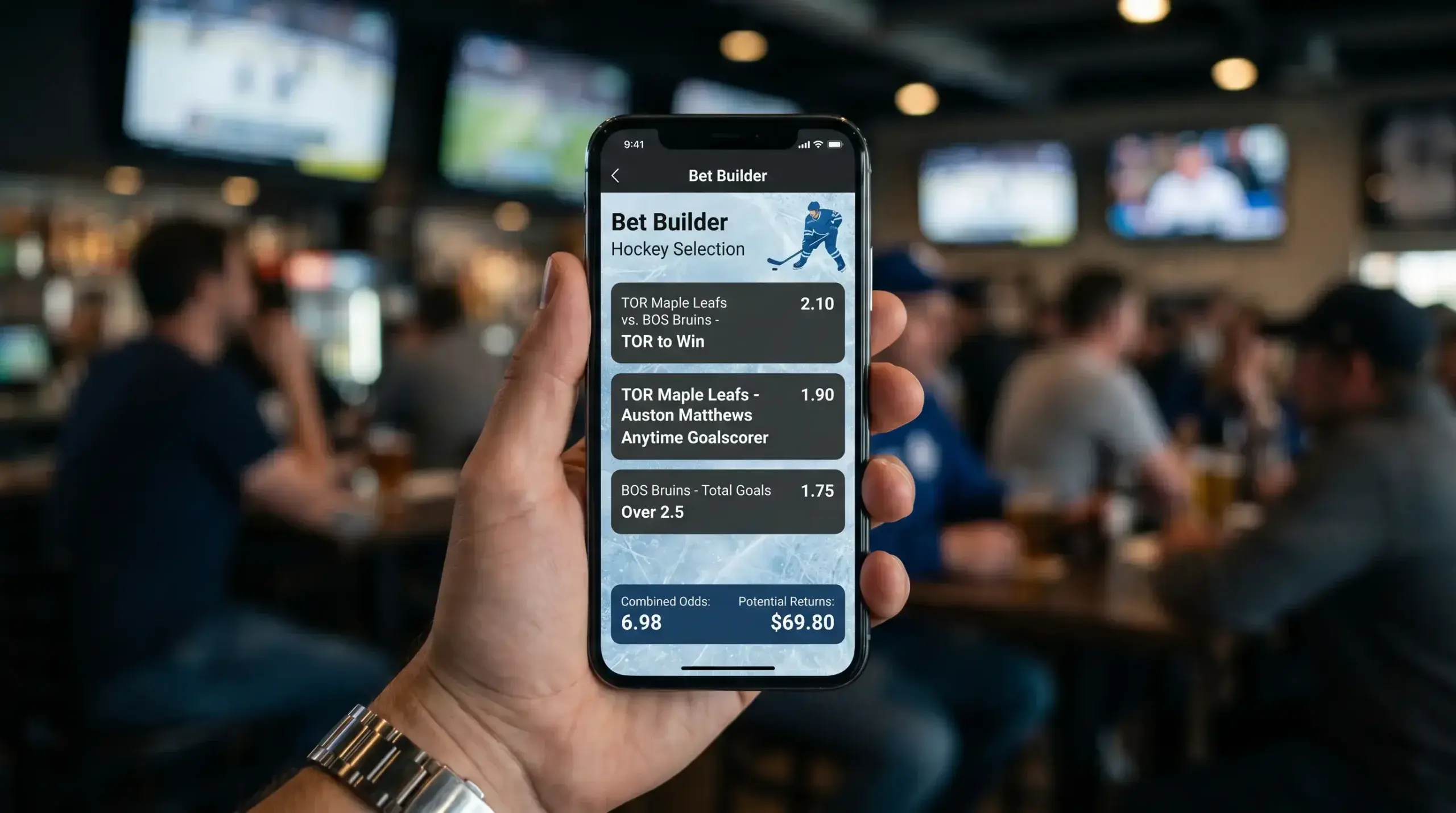

What Bet Builder Adds to Hockey Betting
Before Bet Builder existed, I used to place three separate bets on a single NHL game: a moneyline, a period total, and a player prop. Each one carried its own margin, and managing three open bets on the same match felt clunky. Bet Builder solved that by letting me combine those three opinions into a single wager with compounded odds. It didn’t change my analysis — it changed my execution.
Bet Builder is a bookmaker feature that allows you to select multiple outcomes from the same game and combine them into one bet. The concept mirrors the same-game parlay, and many UK operators use both terms interchangeably. New bookmakers entering the UK market have been adding niche sports markets at a rate of roughly 34% per year, and Bet Builder for hockey is one of the clearest beneficiaries of that expansion. What was once an NFL-only feature at most operators now covers NHL games regularly.
The feature’s practical value lies in its flexibility. You can build combinations that no pre-packaged market offers — a team to win, the total to go under, and a specific player to score, all on the same slip. That level of customisation allows you to express multi-dimensional opinions about a game, which is particularly useful in hockey where goaltending, pace, and individual talent all influence the result through different mechanisms.
How Bet Builder Works for Hockey Markets
Using Bet Builder is straightforward. Navigate to the match page on your bookmaker’s app or site. Select the Bet Builder tab (sometimes labelled “Build a Bet” or “Request a Bet”). Choose your first selection — say, the moneyline. Add your second selection — perhaps a period market or a player prop. The interface will calculate combined odds as you add legs, adjusting for correlation between your selections.
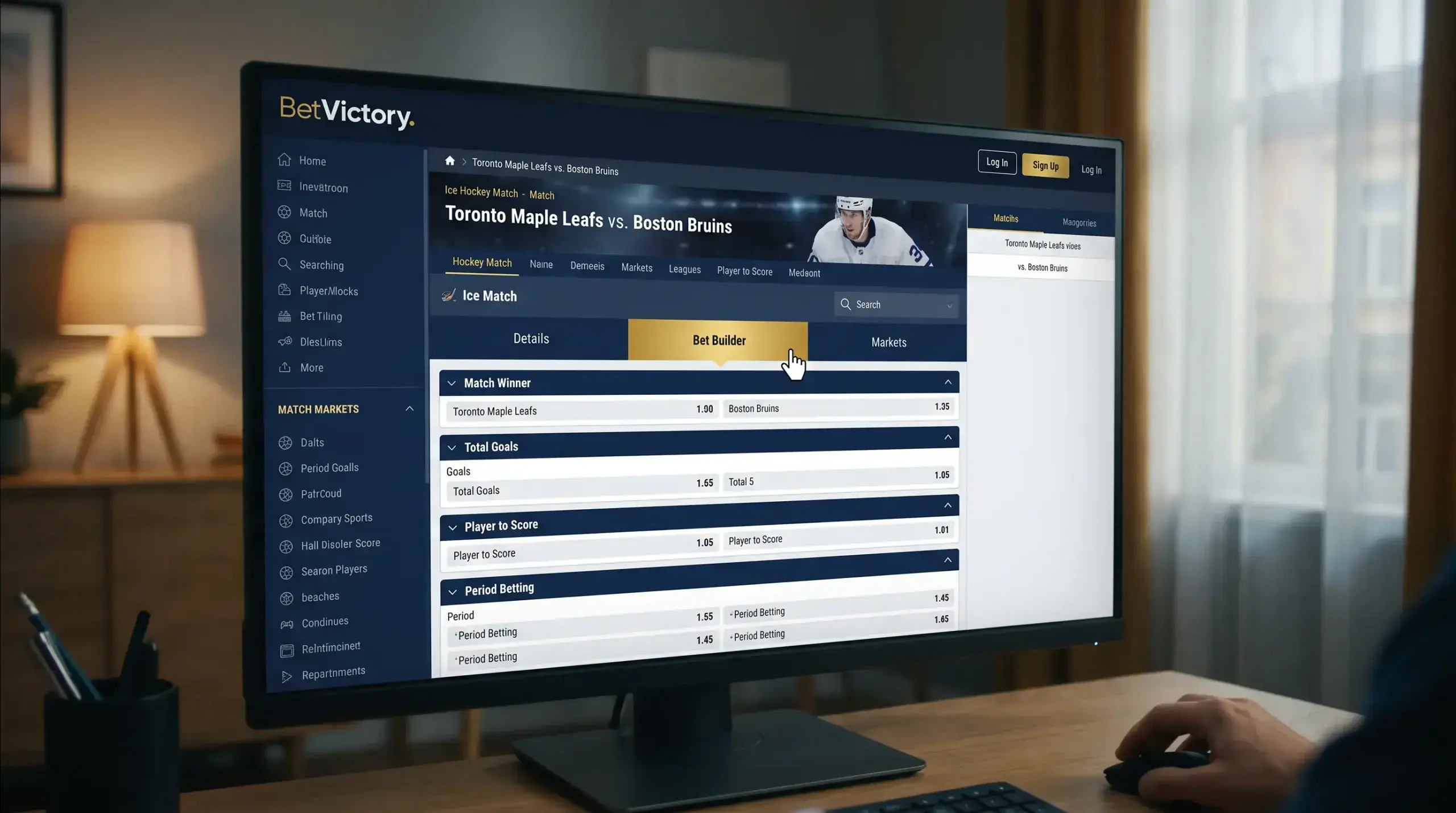
Not every combination is permitted. Bookmakers block legs that are logically contradictory — you can’t combine “Team A wins” with “Team B wins,” for example. They also block some combinations where the correlation is so strong that the combined bet would be essentially redundant — like combining “over 7.5 goals” with “both teams score 3+” where the latter is almost guaranteed if the former hits.
The maximum number of legs varies by operator. Some allow up to 12 selections in a single Bet Builder; others cap it at six. For hockey, I rarely exceed four legs. Each additional leg increases the bookmaker’s compound margin and reduces your probability of winning. The sweet spot, in my experience, is three legs — enough to create an interesting combined price without stacking the odds too heavily against you.
One operational detail that catches people out: Bet Builder odds are calculated dynamically and can change between the time you add your selections and the time you confirm the bet. If a line moves while you’re building, the combined odds adjust. Always review the final price before confirming.
Three Example Bet Builder Combinations
The share of live betting in total handle exceeded 50% at DraftKings during 2025, and Bet Builder contributes to that growth by offering pre-game combinations that remain open for in-play cash out. Here are three builds I use regularly, each designed around a different analytical thesis.

Build one: the dominant favourite. Start with the moneyline on a heavy favourite (-180 or steeper). Add “over 5.5 total goals” — if the favourite is dominant, goals tend to flow. Third leg: a player prop on the favourite’s leading scorer to record 1+ point (goal or assist). This build exploits positive correlation between the favourite winning, a high-scoring game, and the top player contributing. Combined odds typically land around 3.50-4.50 decimal.
Build two: the defensive grind. Take the underdog moneyline (or the draw on the 60-minute line). Add “under 5.5 total goals.” Third leg: the underdog’s goaltender to record over 28.5 saves. This build is internally consistent — a low-scoring upset typically involves the underdog’s goaltender facing heavy shot volumes and making saves. The positive correlation between the underdog winning and a low total isn’t fully reflected in the Bet Builder pricing. Combined odds typically sit around 8.00-12.00 decimal.

Build three: the first-period play. Choose “first period draw” (which hits 35-38% of the time across the NHL). Add “first-period under 1.5 goals.” The correlation here is strong — a drawn first period at 0-0 automatically goes under 1.5 — but the Bet Builder engine doesn’t always fully adjust for this, sometimes offering combined odds slightly above what the true probability warrants. A third leg can be added if you have a view on the full-game result, but I often keep this as a two-leg build for simplicity. Combined odds: around 2.00-2.50 decimal.

Bet Builder vs Same-Game Parlay: Are They the Same?
Functionally, yes. Conceptually, yes. In practice, the pricing can differ. Bet Builder and same-game parlay are two names for the same product — combining multiple selections from a single game into one bet. The naming depends on the bookmaker: UK-facing operators tend to use “Bet Builder,” while US-focused operators prefer “same-game parlay” or “SGP.”
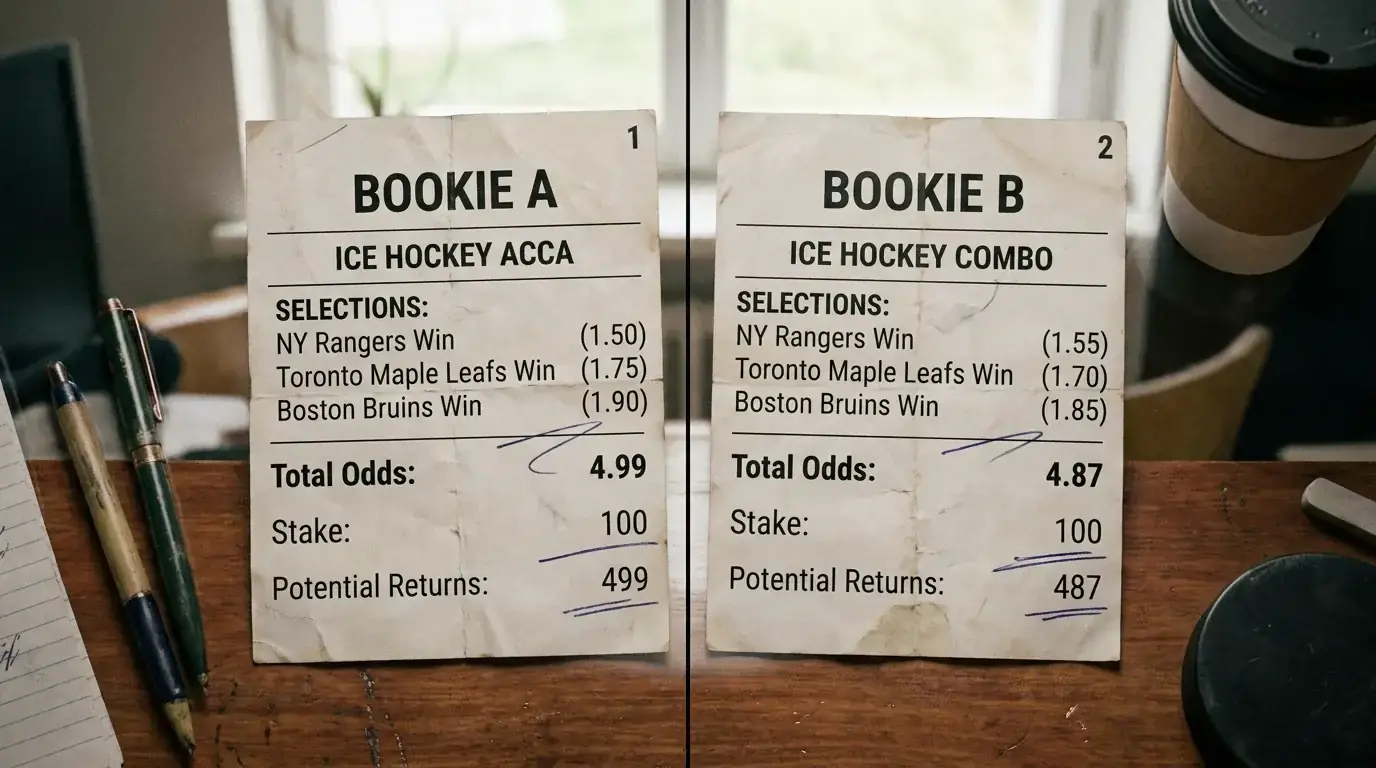
Where differences emerge is in the correlation models each operator uses. Two bookmakers offering the same three-leg combination on the same NHL game can produce combined odds that differ by 15-20%. That’s not a naming difference — it’s a modelling difference. Each bookmaker’s algorithm applies its own correlation adjustments, and some are more generous than others on specific combination types.
I maintain active accounts with three operators partly for this reason. When I’ve identified a Bet Builder combination I want to play, I check the combined odds at each operator before placing. The operator with the best combined price gets the bet. Over a season, this line-shopping on Bet Builder odds adds meaningful value — particularly on two-leg builds where the correlation adjustment is the dominant pricing factor.
One minor distinction: some operators offer “Request a Bet” functionality alongside Bet Builder. This allows you to submit a custom combination that isn’t available in the standard Bet Builder menu, and the operator manually prices it. For hockey, this can be useful for exotic combinations involving period-specific markets or less common player props. The downside is that manually priced bets often carry wider margins than algorithmically priced Bet Builder combinations.
