

EIHL Betting: The Market Most UK Bookmakers Overlook
I placed my first EIHL bet in November 2020, on a Belfast Giants match that wasn’t even listed at my primary bookmaker. I had to open an account at a second operator just to find the market. Three years later, the same fixture was available at five different UK-licensed sites with moneyline, puck line, and totals. That trajectory tells you everything about where EIHL betting stands right now — it’s a market in transition, moving from afterthought to legitimate option, and the bettors who learn its quirks during this growth phase will have an advantage once the coverage matures.
The Elite Ice Hockey League is Britain’s top professional hockey competition. Ten teams, 270 regular season games across the 2025-26 season, and a total attendance of 1,321,128 — an average of 3,863 per game. Those numbers won’t compete with Premier League football, but they don’t need to. What matters for betting is that the league has a committed, growing fanbase and an improving data ecosystem, while bookmaker coverage still lags behind the actual level of interest. That gap between demand and supply is where your edge sits.
Here’s what makes EIHL betting genuinely different from the NHL: you can attend the matches. You can stand behind the glass at the Motorpoint Arena in Nottingham and watch the Panthers’ power play in person. You can assess ice conditions, crowd energy, and roster depth first-hand — information that no data feed captures and no bookmaker’s model accounts for. That local knowledge advantage is real, and it’s the single biggest reason I think EIHL betting deserves more attention from serious UK punters than it currently receives.

EIHL Season Format and Competitions
Before you place a single EIHL bet, you need to understand the calendar. The league isn’t a simple league-table-and-cup structure like English football. Multiple competitions run concurrently, each with different stakes and different implications for how teams prioritise their roster.
League Season and Conference Structure
The EIHL regular season runs from September through March, with ten teams playing each other home and away multiple times across conferences. The 2025-26 season featured 270 regular season fixtures — roughly 27 games per team. That’s a fraction of the NHL’s 82-game schedule, and the smaller sample size has direct implications for betting: trends are less reliable, variance is higher, and early-season form can be misleading.
Teams are divided into two conferences, though this structure has shifted over the years as teams have entered and left the league. Each conference’s standings determine playoff seedings, and the top teams qualify for the post-season bracket. The regular season table also determines qualification for the Patton Conference and Gardiner Conference trophies, which carry prestige even if they don’t attract the same betting coverage as the overall standings.
From a betting perspective, the regular season is the period with the most consistent market availability. Bookmakers that cover EIHL typically list moneyline markets for the league phase, with some adding totals during the busiest fixture weekends. If you’re planning to bet EIHL regularly, mapping out the fixture schedule at the start of the season is essential — clusters of games around bank holidays and half-term weeks tend to produce the highest bookmaker coverage.
Challenge Cup, Autumn Cup, and Playoff Finals
The EIHL runs multiple cup competitions alongside the league season, each with its own format and strategic dynamic. The Challenge Cup is the flagship knockout tournament, running from early season through to a two-leg final that regularly sells out both arenas. The Autumn Cup operates in the season’s first few weeks and serves partly as a warm-up competition, partly as a genuine trophy race. Then there are the Playoff Finals, held at a neutral venue — typically the Motorpoint Arena in Nottingham — where the top teams from the regular season compete in a condensed weekend format to crown the overall champion.
Each competition creates different incentives. Challenge Cup group-stage matches sometimes see teams resting key players, especially import forwards, if they have a demanding league schedule in the same week. The Playoff Finals are an all-or-nothing weekend where depth and goaltending become disproportionately important because teams can play three games in two days. Understanding which competition a team is prioritising on a given weekend is one of the small but significant edges available to attentive EIHL bettors.
Betting coverage for cup competitions is spottier than for league games. The Challenge Cup Final and Playoff Finals typically attract full moneyline and sometimes totals markets from the larger operators, but group-stage and early-round matches are often listed only on the day of the game, if at all. If you’re serious about EIHL cup betting, check your bookmaker’s offerings on the morning of the match rather than assuming coverage will be available days in advance.

EIHL Attendance: Four Seasons of Record-Breaking Growth
This is the part of the EIHL story that none of the competitors in the betting content space are telling properly. They mention “growing popularity” in passing and move on. The actual numbers paint a much more compelling picture, and they matter directly for the long-term viability of EIHL betting markets.
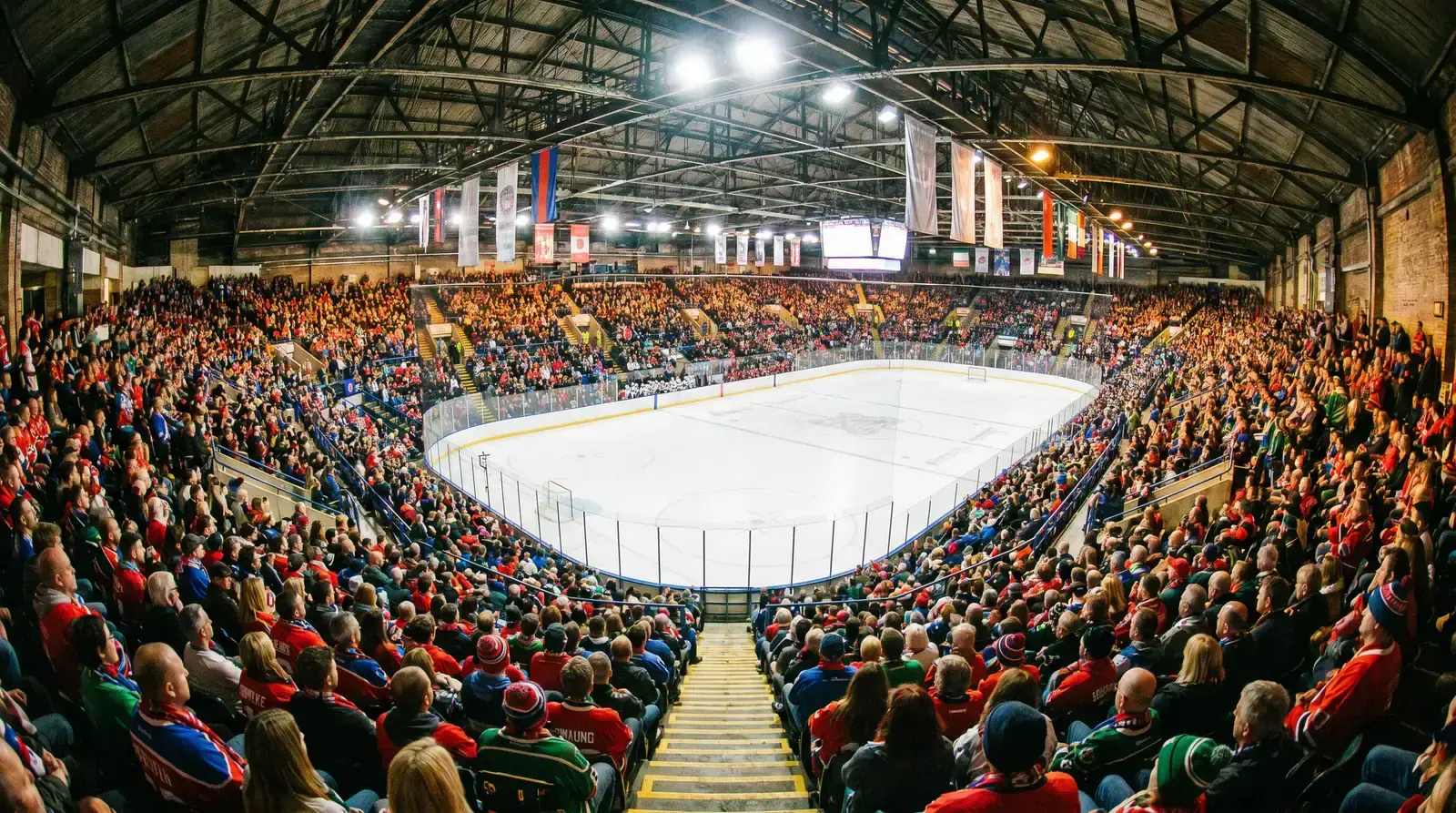
The 2022-23 season was the first time EIHL attendance crossed the one million mark, hitting 1,004,000 across all fixtures. That alone was a milestone for British ice hockey. But it was just the start. The 2023-24 season pushed to 1,133,816 total, averaging 3,532 per game. Then 2024-25 shattered the record again with 1,247,972 total attendance and a 3,660 average — the best in the league’s history at that point. And the 2025-26 season has topped even that, with 1,321,128 total attendance and an average of 3,863 per game.
Do the arithmetic and the trend becomes unmissable: average per-game attendance has grown from 2,885 in the 2021-22 season to 3,863 in 2025-26. That’s a 33.9% increase over four seasons. No other second-tier British professional sport is growing at that rate. It’s the kind of trajectory that forces bookmakers to pay attention, because growing attendance means growing broadcast interest, growing social media engagement, and growing demand for betting markets.
For bettors, the attendance data serves a secondary analytical purpose. EIHL teams play in arenas ranging from 2,000 to 10,000 seats, and the atmosphere in a packed 3,000-seat venue generates a genuine home-ice advantage. Teams like the Nottingham Panthers and Sheffield Steelers regularly sell out their home fixtures, creating environments that visiting teams visibly struggle in. Tracking which arenas are at capacity versus which have empty seats gives you an informal proxy for home-ice advantage that doesn’t show up in any statistical model.
What’s driving this growth? Several factors overlap. Ice hockey as a spectator experience translates well to UK audiences — it’s fast, physical, and rewards live attendance in a way that few other sports match. The success of British players at international level has raised the sport’s profile. And the league has invested in its presentation, with professional streaming coverage and social media engagement that reaches beyond the traditional hockey community.
The growth trajectory also signals that bookmaker coverage will continue to deepen. Two seasons ago, EIHL markets were available at three or four operators. That number has expanded as the league’s profile has risen. If the attendance curve continues — and there’s no sign of it slowing — the betting infrastructure around EIHL will reach a tipping point where full puck line and totals markets become standard rather than exceptional.
For the bettor thinking long-term, getting into EIHL markets now means building knowledge and tracking data before the competition for value intensifies. Every niche sport market follows the same arc: early adopters have the softest lines, and as the betting public catches up, margins tighten and edges shrink. The EIHL is somewhere in the middle of that arc, which makes the present moment particularly interesting.
Which Bookmakers Cover EIHL and What Markets They Offer
Let me be direct: EIHL betting coverage at UK bookmakers is inconsistent. Some operators list every fixture with moneyline and totals. Others cover only weekend games. A few don’t list EIHL at all. The landscape changes season to season, and even within a season the depth of coverage can vary week by week.
The Betting and Gaming Council’s position is clear — licensed members follow strict rules on consumer protection, safer gambling, and robust financial safeguards, standards that the illegal market doesn’t meet. For EIHL bettors, this means every operator you’re considering should hold a UKGC licence. That’s non-negotiable. Beyond licensing, the criteria that matter most for EIHL specifically are market availability, odds competitiveness, and the reliability of listing fixtures in advance.
The operators that do cover EIHL well tend to be the larger multi-sport platforms rather than niche betting sites. New UK-facing bookmakers have been adding niche sport markets at a rate 34% faster than mainstream sports year on year between 2024 and 2026, and EIHL has benefited from this broader expansion. The practical reality, though, is that you’ll likely need accounts at two or three operators to ensure you always have access to EIHL markets when you want to bet.
Market depth is the bigger limitation. Moneyline — match winner including overtime — is the standard EIHL market. Puck line and totals appear at some operators for higher-profile fixtures, particularly derby matches and Cup games. Player props are essentially non-existent for EIHL. Same-game parlays are available at a handful of operators but only for fixtures where the base market offering is deep enough to combine selections.
If you want to build EIHL predictions into a regular betting routine, my advice is to map which operators cover which fixtures at the start of each month. Save the schedule. Check each operator’s EIHL page on a Friday morning for weekend coverage. Build your shortlist of three or four reliable sources and accept that this market won’t match the depth you get from the Premier League or even the NHL. The trade-off is that the lines you do find are often less sharp — fewer bettors means less market efficiency, and that inefficiency is your opportunity.

Key Factors for EIHL Betting
EIHL isn’t the NHL with smaller arenas. The factors that drive outcomes are structurally different, and bettors who apply an NHL framework wholesale will lose money. What follows are the two variables I’ve found matter most for EIHL betting results — variables that don’t have direct equivalents in any other UK sport.
Import Player Rules and Roster Volatility
Every EIHL team operates under a limit on “import” players — skaters and goaltenders who aren’t eligible to play for Great Britain at international level. The exact number shifts periodically as the league adjusts its regulations, but the principle remains constant: each roster contains a mix of imports (typically North American or Scandinavian professionals) and British-trained players (often developed through the junior system or dual-national pathways).
This import limit creates a dynamic that doesn’t exist in the NHL or in most European leagues. When a team loses an import player to injury, their replacement options are constrained by the cap. They might have to promote a British-trained player who isn’t at the same competitive level, or they might need to sign a replacement import from the free agent market — a process that can take days or weeks depending on visa requirements and player availability. During that gap, the team’s quality drops measurably, and the betting line rarely reflects the full extent of the decline because bookmakers often don’t track EIHL roster changes with the same granularity as NHL changes.
I check EIHL team rosters every week during the season, specifically looking for import player changes. A team that loses its starting import goaltender mid-season faces a bigger disruption than the equivalent NHL team losing their starter, because the EIHL replacement pool is shallower and the integration time is longer. The opposite also applies — a team signing a high-quality import forward mid-season can see a performance jump that the market underprices for the first two or three games.
Roster volatility in the EIHL is fundamentally higher than in any other British league sport. Players move between teams mid-season more frequently than football transfers, and the impact of each move is proportionally larger because of the smaller roster sizes. Tracking these moves isn’t glamorous, but it’s the single most repeatable source of information advantage I’ve found in this market.

Arena Sizes and Travel Distances
Sheffield Steelers play in a 9,000-capacity arena. Guildford Flames play in one that holds around 2,000. That’s a four-and-a-half-times difference in crowd size between two teams in the same league, and the atmosphere gap is even wider than the numbers suggest. A sell-out at Sheffield creates an environment that genuinely rattles visiting teams. A half-full arena in a smaller venue produces none of that pressure.
Travel distances compound the home-ice effect. The EIHL stretches from Belfast in the west to Guildford in the south-east, with teams in Cardiff, Coventry, Nottingham, Sheffield, Manchester, Dundee, Glasgow, and Fife. Belfast involves a flight for every away team. The Scottish teams face four-to-six-hour coach journeys for fixtures in the English Midlands. These aren’t the private charter flights that NHL teams use — EIHL travel is overwhelmingly by coach, with the associated fatigue and time cost.
I weight home-ice advantage more heavily in EIHL betting than in any other sport I cover. The combination of crowd density in smaller arenas, inconsistent ice quality between venues, and genuine travel fatigue creates a home-win rate that exceeds what you’d expect from the talent differential alone. When a team from the south of England travels to Dundee for a Sunday afternoon fixture after playing at home on Saturday night, the schedule spot alone adds meaningful value to the home side.
EIHL vs NHL Betting: Key Differences
The temptation for any bettor moving between EIHL and NHL is to treat them as the same sport with different talent levels. They’re not. The differences run deeper than quality, and ignoring them will cost you.
Market liquidity is the most obvious gap. An NHL moneyline for a regular season game between two mid-table teams will have a margin of 4 to 6% at a competitive UK bookmaker. The same matchup in the EIHL might carry a margin of 8 to 12%, reflecting the lower betting volume and higher uncertainty for the bookmaker. You’re paying more for each EIHL bet in margin terms, which means your selections need a higher strike rate or higher average odds to achieve the same profitability.
Data availability creates a second gap. NHL teams generate granular statistics — expected goals, Corsi, Fenwick, shot quality metrics, zone entry data — that are publicly available and free. EIHL data is improving but remains limited to basic box score statistics: goals, assists, penalties, shots on goal, save percentage. You can’t run the same analytical models on EIHL that work for the NHL, which means EIHL betting relies more heavily on direct observation, roster knowledge, and form assessment than on statistical modelling.
Scoring patterns differ too. EIHL games tend to be higher-scoring than NHL games, with wider margins of victory. The talent gap between the best and worst teams in the EIHL is larger than in the NHL, where the salary cap enforces competitive balance. This means EIHL puck line bets — when they’re available — behave differently. A 1.5-goal handicap covers more frequently in the EIHL because blowouts are more common.
Goaltending is proportionally more important in the EIHL. With smaller rosters and fewer import slots allocated to goaltenders, the quality gap between a team’s starter and backup is often wider than in the NHL. When a starter goes down, the impact on the team’s results is more dramatic and more sustained, partly because the replacement pool is shallower and partly because EIHL teams don’t have the depth to compensate through offence the way NHL teams can.
The scheduling philosophy is also different. NHL teams play four times a week with travel days built in. EIHL teams often play Saturday-Sunday double headers, sometimes against the same opponent. These back-to-back fixtures create unique betting angles because you can observe the first game’s dynamics and apply that information to the second game’s market. If a team’s starting goaltender gets pulled in Saturday’s game, Sunday’s line should reflect the likely backup start — but it doesn’t always.
Perhaps the most underappreciated difference is in how the two leagues handle information flow. The NHL has a tightly regulated media ecosystem where injury reports, lineup changes, and goaltender confirmations reach the market simultaneously through official channels. The EIHL information flow is looser — roster changes might be announced on a team’s social media account, mentioned in a local newspaper report, or shared by a fan forum regular before appearing anywhere official. If you’re embedded in the EIHL community, you hear things before the bookmaker does. That information asymmetry simply doesn’t exist in the NHL, where everyone gets the same data at the same time.
The bottom line is straightforward: EIHL betting rewards a fundamentally different skill set than NHL betting. The NHL rewards data analysis and model-building. The EIHL rewards local knowledge, roster tracking, and being plugged into the community. The best EIHL bettors I know attend games regularly, follow team social media accounts, and maintain spreadsheets of import player movements. They’re not building expected goals models. They’re building information networks, and those networks generate the edge that makes EIHL betting profitable despite the wider margins.