

The Overtime Question Every Hockey Bettor Must Answer First
I lost my first three hockey bets to overtime. Not because I picked the wrong team — because I didn’t know which of my bets included overtime and which didn’t. A moneyline bet that includes OT is a fundamentally different wager from a puck line that doesn’t settle until the final horn. The rules governing overtime determine whether your winning position survives an extra five minutes or gets wiped out by a shootout goal. If you bet on hockey without understanding these rules, you’re not betting — you’re guessing.
NHL totals typically open around 6 or 6.5, and approximately 25% of regular-season games go to overtime or a shootout. That means one in four of your bets will be directly affected by overtime rules. Getting comfortable with these rules before you place a single wager isn’t optional — it’s the foundation that everything else rests on.
The confusion arises because hockey has multiple overtime formats depending on the league and the stage of the season, and different bet types interact with those formats differently. A moneyline bet and a puck line bet on the same game can produce opposite outcomes when overtime hits. Understanding which bets include OT — and which don’t — is the first thing I explain to anyone who asks me how to start betting on hockey.
Overtime Formats: NHL, EIHL, and IIHF Compared
The 2026 IIHF World Championship featured 64 games with 371 goals. A meaningful portion of those games went to overtime, and the overtime format differed from what NHL bettors are accustomed to. Each league handles overtime differently, and those differences have direct betting implications.
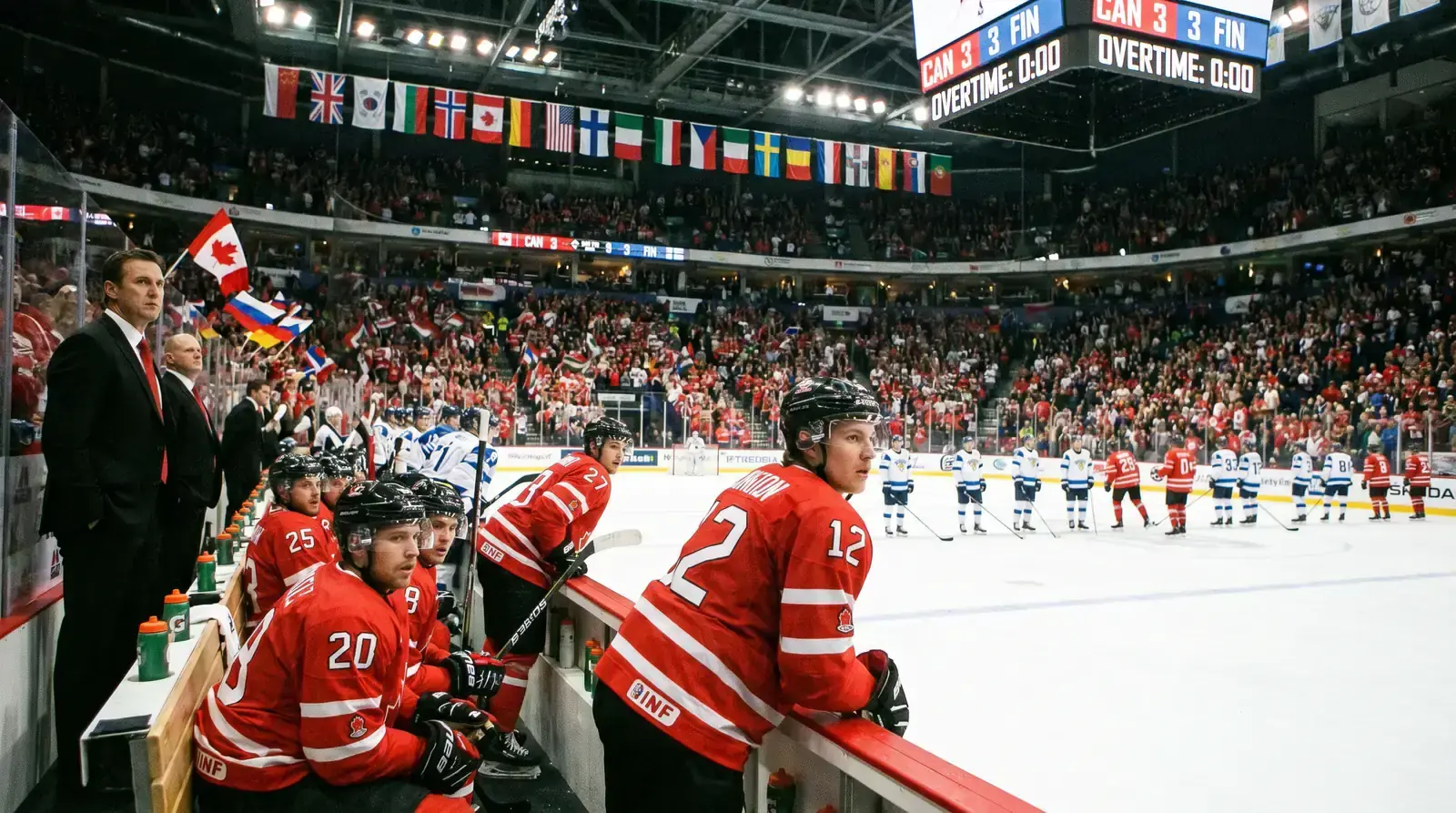
In the NHL regular season, a tied game after 60 minutes proceeds to a five-minute overtime period played three-on-three. If no goal is scored in overtime, the game is decided by a shootout. Both the overtime goal and the shootout outcome count as a one-goal margin for betting purposes. In the playoffs, overtime is completely different: 20-minute periods played five-on-five, with no shootout. Games continue until a goal is scored, which means playoff overtime can last multiple additional periods.
The EIHL uses a five-minute overtime followed by a shootout during the regular season, similar to the NHL’s format. Playoff and cup games may use different formats depending on the competition — some EIHL cup ties use continuous overtime in elimination games while round-robin stages use shootouts. Always check the specific competition rules before betting on EIHL overtime-related markets.
The IIHF uses a five-minute three-on-three overtime followed by a shootout in the group stage. In the knockout rounds, the overtime period extends to ten minutes before proceeding to a shootout. These longer overtime periods in knockouts give more time for a goal to be scored before the lottery of a shootout decides the result, which affects how you should think about regulation-time markets.
For UK bettors, the practical takeaway is straightforward: verify the overtime format before you bet. A regular-season NHL bet is governed by one set of rules. A playoff NHL bet is governed by another. An EIHL Challenge Cup bet may be governed by yet a third. Assumptions will cost you money.
Which Bet Types Include Overtime and Shootouts
The standard full-game moneyline includes overtime and shootout results at virtually every UK bookmaker. Whoever wins the game — however they win it — wins your bet. This is the simplest interpretation and the default for most hockey bets.
The 60-minute line (regulation-time moneyline) does not include overtime. It’s a three-way market: Team A wins in regulation, Team B wins in regulation, or the game is tied after 60 minutes. If the game goes to overtime, bets on Team A and Team B both lose; only the draw pays. This market is especially relevant for the puck line, where the distinction between regulation and full-game results can determine whether your bet wins or loses.
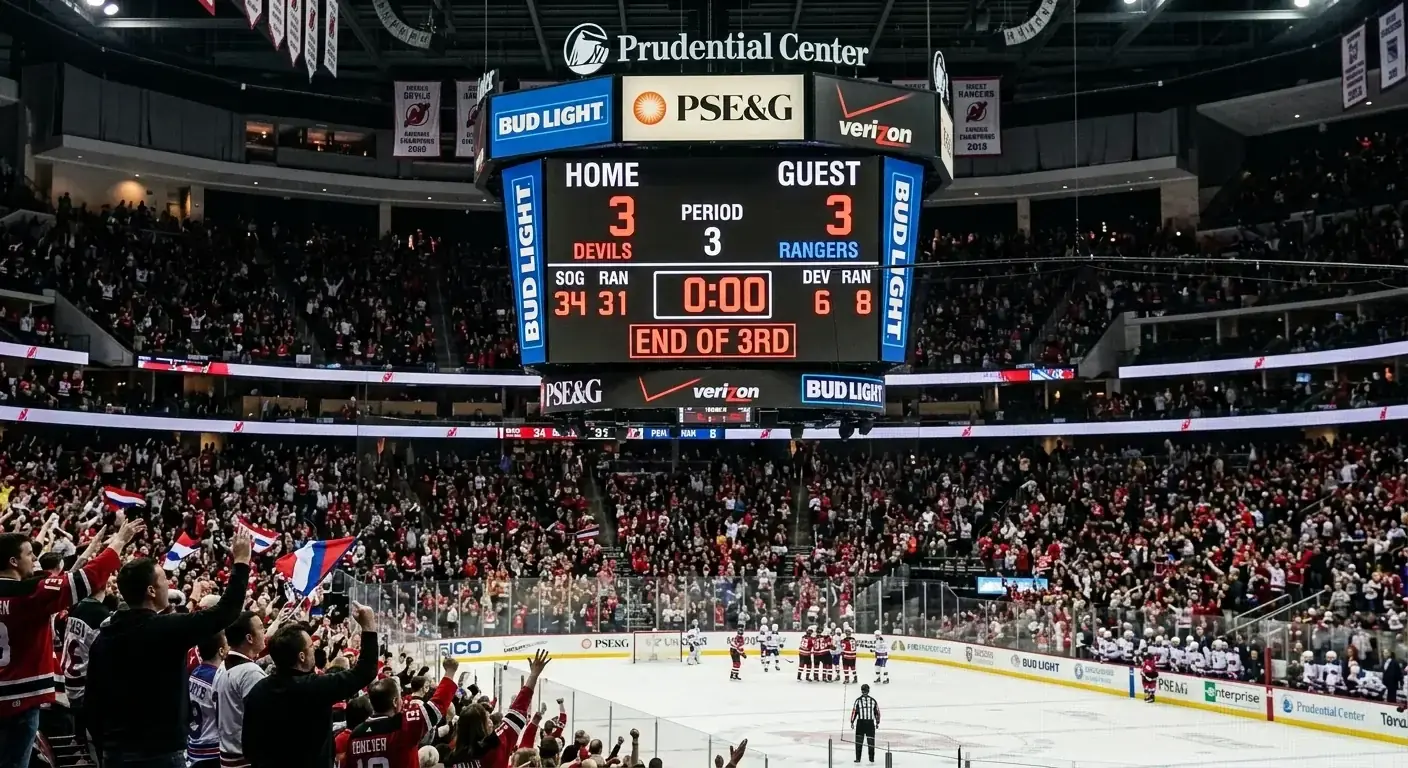
Totals vary by bookmaker. Most UK operators settle full-game totals including overtime goals but excluding the shootout (a shootout win counts as one additional goal). However, some bookmakers include shootout results in their totals, and others offer separate “regulation time totals” and “including OT totals” markets. The difference matters most for games that end 5-4 in overtime — a total of 6 would be over on regulation-time scoring (5-4 at the end of OT before the winning goal) but might settle differently depending on whether the OT goal counts toward the total.
Period bets are never affected by overtime. Period markets settle based on what happens within that specific 20-minute period. If you bet on the first-period winner or the first-period total, overtime is irrelevant — the first period ends when the first period ends.
Player props generally include overtime but not shootouts. A player’s shots on goal, assists, or goals scored during overtime count toward their prop totals. Shootout goals do not. If you’re betting a player prop on an anytime goalscorer market, a goal in overtime settles the bet as a winner, but a shootout goal does not.
Strategic Implications of Overtime for Bettors
Tim Miller, executive director of the UK Gambling Commission, has spoken about the importance of consumer transparency in how bets are settled. Overtime rules are one area where that transparency matters enormously for bettors.

Knowing that roughly 25% of NHL games reach overtime changes how I approach two bet types in particular. For moneylines, the inclusion of overtime means I’m comfortable backing teams that I believe are better in three-on-three situations — typically teams with elite forward talent and strong skating. Three-on-three overtime is a skills showcase that rewards speed and individual brilliance over defensive systems. Teams with top-tier players gain a disproportionate edge in overtime, and that edge is only partially priced into the full-game moneyline.

For puck lines, overtime is a structural hazard. Every game that reaches overtime finishes with a one-goal margin (or a shootout, which counts as one goal). That means the -1.5 favourite cannot cover the puck line in any overtime game. If you bet the puck line heavily, you need to account for the 25% of games that automatically become puck line losses for the favourite. My puck line strategy focuses on matchups where I believe a regulation-time blowout is likely — games where the probability of overtime is below average rather than above it.
Overtime also creates specific opportunities in live betting. When a game is tied in the final minutes of the third period, the pre-overtime dynamics are unique: teams may play conservatively to ensure they reach overtime and secure at least one point (in the NHL’s points system), which can depress third-period scoring. Then, once overtime begins, the three-on-three format produces goals at a dramatically higher rate per minute than any period of regulation. That transition from defensive caution to wide-open hockey creates a pricing recalibration that in-play bettors can exploit.
